by Robert E. Hornberger, Esq | Jan 23, 2014
‘Irretrievable Breakdown’ a New Grounds for Divorce in New York
 In 2010, the New York State legislature amended the state’s Domestic Relations Law in a way that effects divorce proceedings in Nassau County or Suffolk County, Long Island, NY courts. The legislature added “Irretrievable Breakdown” as a new grounds for a divorce.
Under the statute, an action for divorce can be initiated if the husband and wife relationship has broken down irretrievably for at least six months. Irretrievable Breakdown of the marriage allows for divorce if you and your partner find that you are in fact incompatible, and therefore enables a No-Fault divorce. Because of the Irretrievable Breakdown clause, you do not need to prove wrongdoing on the behalf of your spouse; rather you can unilaterally begin a divorce proceeding so long as the required six-month period has passed. The factors that can be applicable for this type of divorce may range anywhere from personality conflicts, trust issues, financial difficulties, or simply constant fighting. This may be extremely helpful if your situation does not involve abandonment, adultery, your spouse having been imprisoned, or any other specific grounds present in the New York Domestic Relations law.
What Must be Alleged to Claim Irretrievable Breakdown on Long Island?
In a general action for divorce, New York’s Domestic Relations Law requires the divorcing party to specifically state the type of misconduct alleged, including circumstances, location, and time of any event, but what must be alleged to claim Irretrievable Breakdown on Long Island? Fortunately for those seeking to allege irretrievable breakdown in their divorce proceedings, a recent appellate division decision, Tuper v. Tuper, has shed some light on this. When asserting divorce due to Irretrievable Breakdown, the individual filing for divorce must only show conclusory allegations under oath; there need not be specific accusations, details, or a play-by-play of the breakdown of the marriage. Therefore, when filing for divorce on Long Island, be sure your divorce attorney submits an affidavit in which you have asserted that the husband and wife relationship was broken down irretrievably for at least the required six-month period. Simply stating to your divorce attorney that the marriage has broken down is insufficient: this admission must be done under oath. This is different from asserting a divorce action based upon adultery or cruel and inhumane treatment, where specific facts need to be alleged.
Furthermore, your divorce attorney should be aware that divorce based on irretrievable breakdown cannot be granted until all economic and visitation issues have been resolved. This includes not only issues concerning equitable distribution, child and spousal support, fees due to counsel and any expert witnesses, but also those revolving around child custody and/or visitation rights. This is important to recognize and resolve these issues in advance to ensure that your divorce process can be settled as quickly as possible.
How Long Do I Have to Commence the Action?
Typically, an action for divorce has a statute of limitation of five years, beginning to run either from the date of the complained of incident or the date of discovery, depending upon the grounds for divorce. When filing for divorce based on Irretrievable Breakdown of the marriage, it is difficult to cite an exact moment from which a statute of limitations should begin to run. This is because it is difficult to cite the exact moment of the breakdown of the marriage, which would be the moment at which to start the five-year statute of limitations. Due to this, and the fact that the breakdown is seen as one continuing event, you can bring your Irretrievable Breakdown divorce action at any time after the required six-month period.
What if My Spouse Contests the Allegations?
As with any other grounds for divorce under New York’s Domestic Relations Law, alleging divorce on the grounds of Irretrievable Breakdown is subject to contest from your partner, and accordingly, a jury trial. If your spouse contests the fact that the marriage had broken down for over six months, it is his or her right to a trial and potentially a jury trial.
What Does This Mean For Me?
We know that sometimes marriages do not work, and this is sometimes no one’s fault. If you find yourself in such a situation for at least six-months, and you decide that divorce is the proper route, Irretrievable Breakdown grounds for divorce may be of interest to you.
The Long Island divorce lawyers and divorce mediators at the law firm of Robert E. Hornberger, Esq., PC have extensive experience with all grounds for divorce in Nassau County and Suffolk County courts. For more information about the best way to settle your divorce, please contact us at 631-923-1910 for a free consultation. You’ll be glad you did.
by Robert E. Hornberger, Esq | Jan 9, 2014
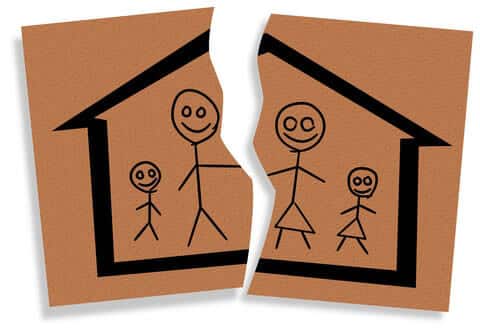 With the rise in divorce rates over the last few decades, the public, political figures, and scholars have all questioned the ease with which married couples can dissolve a marriage through No-Fault Divorce on Long Island and throughout the U.S. People from all walks of live have expressed concern over the increase in single-parent families. Some perceive the rise in divorce rates as a threat to what they consider the “Traditional American Familial Structure”: two parents raising their children collectively. Proponents of preserving “The Nuclear Family” structure argue that single-parent families are severely lacking in the core moral values that the nuclear family has promoted over the past century or more.
Is Divorce Immoral?
There have been several theories investigating the question as to why divorce rates have steadily increased over time. One theory in particular suggests that “parental selfishness” is responsible for the dissolution of marriages. They further believe that the prevalence and acceptance of single-parent families itself breeds more single-family households. However, these theories are not universal and are highly controversial. Many others argue that single-parent families should not be stigmatized for being “Non-Traditional”. While controversial, proponents of dual parent families essentially promote that the presence of both parents in a child’s life is critical to maintain a healthy family. They further suggest that supporting or encouraging easy access to divorce, which they believe results in the further breakdown of the traditional family structure, is in a sense immoral because they claim it is damaging to the children of the divorced parents.
Should Parents Sacrifice a Healthy, Happy Life for their Children?
Should Divorced Parents be Shunned?
Traditional Family Value proponents’ belief system revolves around the notion that responsible parents remain married and that this enables them to be self-sufficient, and financially stable. They believe that parents must make sacrifices for their families even if doing so results in spousal inequality or overall unhappiness within a marriage. Ultimately, proponents of this perspective feel that single-parent families are immoral and the public should turn away from accepting such non-traditional families.
Another Theory Regarding the Morality of Divorce
A drastically different theory regarding the morality of divorce attributes personal happiness to an individual’s decision to file for divorce. Rather than condemning non-traditional families for lacking in core moral values, proponents of this theory emphasize that families act responsibly, rather than attempt to maintain the Traditional Nuclear Family structure at any cost. In essence, proponents of this theory are far less concerned with whether a family is considered Traditional or Non-traditional and more concerned with whether the family is adequately supported.
Support for Core Values Within Any Family Unit
This particular train of thought accepts, and even embraces, Non-traditional families, provided the family unit promotes certain core values, including: equality, commitment, support, and nurturance. This type of approach in consideration of the family structure undoubtedly takes into account the fact that Family Law in the U.S. has evolved and changed over the last few decades. It recognizes that finding “Fault” should not have to be established by parties seeking a divorce. Proponents on this side of the argument believe that Fault-based divorce is what is wrong with trying to preserve the nuclear family at all costs. They believe that Fault-based divorce not only makes divorce more difficult legally, but also emotionally and financially and is contrary to the health and happiness of all members of the family.
No-Fault Divorce Helps Resolve Gender Inequality and Domestic Violence Issues
Furthermore, this theory identifies and tries to resolve gender inequality in marriage and in divorce and additionally emphasizes the dangers associated with domestic violence and the damage it can do to the family unit. Lastly, this theory also recognizes the rights of unwed fathers as they pertain to child custody. All in all, this theory is one of progression that promotes the acceptance of all families: Traditional or Non-traditional.
Does Ease of Divorce Promote Relationship Laziness?
Although many would agree that society should be more willing to accept non-traditional families rather than shun them, the question still remains as to whether the reinforcement of the traditional family structure is useful in preserving what American society views as its core “fundamental values”. While suggesting that parties remain unhappily married can have a damaging effect on each member of the family unit, single-parent families do tend to face more adversity than families consisting of two parents raising children collectively. The question seems to be whether individual family members remaining in an unhappy or dangerous marriage face more adversity. Moreover, some may argue that marriage should be considered a serious commitment that should not be taken lightly and that the current trend in the acceptance of the Non-Traditional family promotes a certain lack of seriousness and lack of effort that used to exist in personal relationships.
Evolving Preconceived Notions of ‘Typical’ American Family on Long Island
Whatever the case may be, we cannot deny that most of American culture has changed in terms of how we view the family. Consequently, we must question whether to do away with our preconceived notions of what the “typical American family” ought to look like and accept that one person’s set of moral values can be different from another’s.
Questions? Need No Fault Divorce Help on Long Island?
Do you have questions about No-Fault Divorce, Divorce Mediation, Collaborative or Divorce Litigation on Long Island, NY? We’re here to help. Call us at 631-923-1910 or fill out the short form on this page for a free consultation in our comfortable Melville offices convenient to Nassau County and Suffolk County residents.
by Robert E. Hornberger, Esq | Nov 14, 2013
 While Divorce Mediation may be considered an effective tool in assisting parties to amicably and expeditiously divorce in Nassau and Suffolk County on Long Island, NY, it may not be the best Alternative Dispute Resolution method for every couple seeking a divorce.
Divorce Mediator Must Recognize & Mitigate Power Imbalances
Throughout the divorce mediation process, it is the divorce mediator’s role to identify any power imbalances that exist between the parties and mitigate such disparities. Divorce mediators must also be able to identify situations where the divorce mediation should be discontinued or where engaging in divorce mediation would be unsuitable for the parties involved altogether.
No Fault Divorce Floods Courts, Causes Delays
With the introduction of No-Fault divorce legislation across the country in the 1970s, divorce rates began to soar and the dissolution of marriage became increasingly accepted as a societal norm. In return, courts became flooded with divorce filings and parties to the divorce began to experience significant delays with respect to the full adjudication of their divorce proceedings.
Dissatisfaction with Litigation Increases Popularity of Divorce Mediation
As a direct response to the overall dissatisfaction with the adversarial approach to divorce, divorcing couples began to opt for divorce mediation as an alternative to litigating their claims in court. While divorce mediation has proven to be a cost-effective and expedient alternative to litigation, the process has flaws of its own. Specifically, divorce mediation does not account for the likelihood that one spouse will inherently be more vulnerable than the other during the negotiation process when it comes to addressing certain issues.
Divorce Mediation Assumes Equal Power Between Spouses
Given the nature of divorce mediation as a practice, the bargaining power between the parties is assumed to be equal. Should the situation arise where one party possesses more power than the other, the divorce mediator may employ certain informal sanctions to maintain a balance of power during the negotiation process so the divorce mediation remains productive.
Methods of Maintaining Power in Divorce Mediation
An example of one method a divorce mediator may use to do so is to interrupt a party if he or she feels that the party is engaging in discourse that is counter-productive to reaching the goals of the divorce mediation. The divorce mediator will then re-focus the conversation to more pertinent and appropriate topics of conversation. By doing so, the divorce mediator essentially steers the parties away from assigning blame to one another and re-establishes the primary goal of divorce mediation: to resolve the divorce-related issues in an amicable fashion. In addition to this type of methodology to maintain a balance of power during divorce mediation, a divorce mediator may encourage the parties to put themselves in the position of the other party and view the issues from the other spouse’s point of view.
Balancing Power Can Compromise Neutrality of Divorce Mediator
However, when a divorce mediator takes action to interrupt negotiations, he or she is often protecting the weaker party by trying to balance the power between the two, and will lose one of the most important characteristics of the mediator: neutrality. If the divorce mediator’s actions result in unequal representation of either party, the divorce mediator’s actions would violate the Model Code of Professional Responsibility and the ABA Standards of Practice for Lawyer Mediations in Family Disputes. Therefore, when power balancing issues arise, the divorce mediator has a tough job; he or she must consider the interests of the parties, the best way to mediate the dispute, and the professional standards he or she must follow while doing so.
When there is a disparity of power, one party has the ability to unfairly influence the other. This ability can arise from several factors, including:
- Guilt. Guilt can be a large influencing factor. For example, one party may feel guilt about initiating the divorce, so that spouse would be willing to compromise more than the other.
- Desire. Sometimes one party may want the marriage to end more than the other, so he or she might be willing to compromise more.
- Anger. Both of these situations can also result in anger, or lashing-out by the parties, instead of more willingness to compromise.
- Financial Power. Although the factors discussed above are emotional, the main motivating factor in divorce mediation is often economic in nature. In many cases, one party is dependent on the other for financial support. It is very likely that the dependent spouse is in a much less favorable position of power than the financially independent spouse. Further, divorce disputes are focused on dividing the assets of the divorcing couple. It is obvious that in this context, money is a major issue, and the party with the most money may wield more power.
Regardless of the source of the power disparity in divorce mediation, the mediator must proceed carefully when trying to correct the imbalance. He or she may have many strategic options, including avoiding certain issues, interrupting parties, etc. However, if the divorce mediator’s intervention rises to the level of representing one party at the expense of the other, the divorce mediator violates the professional standards to which he or she must adhere. Therefore, mediation may not be appropriate in resolving every divorce dispute.
To learn more about Divorce Mediators on Long Island and how they can save you time, money and stress, visit this page: Divorce Mediator Long Island | Nassau County & Suffolk County. If you have questions about the viability of Divorce Mediation in your Long Island divorce case, please contact us for a free complimentary consultation. The law firm of Hornberger Verbitsky, P.C. is committed to the growth of divorce mediation and collaborative divorce as cost effective alternatives to the time-consuming and costly litigation ordinarily required to resolve divorce and other family related matters. We believe that families, and most importantly, children, benefit when parents resolve their issues through less adversarial processes such as divorce mediation and collaborative divorce. Call us at 631-923-1910 or fill out the short form on this page for a free, complimentary consultation where we can discuss the specifics of your case to determine if divorce mediation is right for your unique circumstances.
by Robert E. Hornberger, Esq | Sep 26, 2013
 As a divorce attorney practicing in Nassau County and Suffolk County on Long Island, NY, I am deeply involved in legal debates that surround Family Law and divorce matters as they pertain to my clients. One of the legal issues around which there is much debate is whether the acceptance of No-Fault Divorce has increased the rate of divorce by undermining the marriage contract.
Does No-Fault Divorce Threaten the Institution of Marriage?
Despite New York State’s recognition of no-fault divorce, as well as its widespread acceptance throughout the United States, no-fault divorce has been the subject of much controversy and debate. Many critics of no-fault divorce argue that it essentially increases divorce rates, thereby threatening the institution of marriage. The central issue in this highly political debate is whether the protection of marriage as a social and legal institution ought to be valued more than an individual’s right to dissolve his or her marriage with relative ease.
No-Fault Introduced in ‘70s to Eliminate Conflict, Perjury
The widespread introduction of no-fault divorce to state legislatures began in the 1970s and 1980s. Supporters of the proposed legislation suggested that divorce based on no-fault grounds would eliminate conflict between spouses, as blame for marital issues would no longer have to be assigned to a specific party. Additionally, no-fault divorce would serve to eradicate illegal activity, i.e. parties committing perjury for the purposes of obtaining a divorce.
Opponents Argue No-Fault Divorce Undermines Marriage Contract
While no-fault divorce has undoubtedly alleviated these issues, opponents argue that no-fault divorce has led to the deterioration of marriage as a legal institution. While marriage was traditionally viewed as a binding contract in the form of a lifetime commitment between two parties, no-fault divorce has made that commitment easily revocable. Under this premise, critics argue that marriage can hardly be considered a legal contract anymore, as no-fault divorce renders that contract largely unenforceable. This paradox of a fully revocable contract seems to diminish the legitimacy of marriage.
Divorce Rates Rise After No-Fault Divorce Implementation
Critics point to a significant rise in divorce rates following the implementation of no-fault divorce laws in various states to emphasize this point. Many find that the ability to obtain a quick and easy divorce, which also neglects to reprimand either party for any potential wrongdoing has unquestionably weakened marriages in contemporary American society.
Proponents of no-fault divorce have argued that there is no correlation between the acceptance of no-fault divorce laws and the rise in divorce rates. However, recent research suggests that no-fault divorce is responsible for a 15-25 percent increase in divorce rates since the 1970’s. Maggie Gallagher, End No-Fault Divorce? 75 First Things 24 (1997). Advocates of no-fault divorce who have come to terms with these statistics argue that the restoration of fault-based grounds for divorce would pose an even bigger threat to society from a moral and legal standpoint.
Proponents Argue Revoking No-Fault Divorce will Prolong Litigation, Prevent Justified Divorce, Threaten Children
An argument against the reimplementation of fault-based grounds in many states is that establishing fault will deter the dissolution of marriages that should very well be ended. For example, marriages that involve domestic violence may continue by virtue of the difficulty associated with obtaining a divorce. Moreover, establishing fault in divorce would prolong the litigation process, inviting more conflict between the parties. Intensified marital discord in an already contentious divorce could pose a potential threat to any children involved in the proceedings.
Would Revoking No-Fault Divorce Restrict Personal Freedom?
In addition to this argument is the assertion that doing away with no-fault divorce would revoke the fundamental rights of individuals to make personal decisions regarding marital relationships. Only extending divorce on fault-based grounds places a great deal of legal power in the hands of the state in determining when and whether a divorce should be granted. Advocates of fault-based grounds argue, however, that divorces should not be granted so freely in order to encourage couples to at least attempt to resolve their issues before seeking dissolution of their marriages.
No-Fault Divorce Reflects the Evolution of the Contemporary American Family
What this argument fails to take into consideration in the debate surrounding no-fault divorce is the evolution of the contemporary American family. While fault-based grounds may have been considered the appropriate legal standard prior to the introduction of no-fault divorce, we recognize that times have changed and so have our cultural values. No longer are we a society that stigmatizes failed relationships or overly emphasizes the importance of maintaining “the perfect marriage”. It is virtually impossible to paint a portrait of what the typical American family looks like in this day and age. Resorting to the re-establishment of fault-based grounds for divorce would effectually force individuals to conform to what was once considered to be a social norm, but is no longer today.
Contact Us for More Information on No-Fault Divorce in Nassau, Suffolk, Long Island, NY
Do you have questions about No-Fault Divorce? Contact us today by calling 631-923-1910 or filling out the short form on this page for a free, complimentary consultation where we can discuss the issues surrounding your divorce and whether you are a candidate for a no-fault divorce.

by Robert E. Hornberger, Esq | May 14, 2013
HOME ABOUT US OUR FIRM FIRM YOUR LEGAL TEAM ATTORNEYS YOUR ATTORNEYS ROBERT E HORNBERGER CHRISTINE M VERBITSKY ANNEMARIE LANNI LAWRENCE M. MARINO BRENDA LYNCH (Of Counsel) PRACTICE AREAS AREAS OF EXPERTISE What’s Involved In Divorce DIVORCE DIVORCE COLLABORATIVE...
by Robert E. Hornberger, Esq | Mar 4, 2013
Divorce is Difficult; Mediation Can Ease the Pain

As a Long Island, NY Divorce Attorney, I understand that divorce is usually an emotionally difficult time for the family. The process of the court system, the division of the marital property, and deciding the fate of the children, are all extremely stressful and upsetting for everyone involved.
You Have a Choice for your Divorce
You should know, however, that there is an alternative to resolving these issues that has major benefits to you in the divorce process: Divorce Mediation.
A Faster, Cheaper Alternative to Litigation
While a typical litigated divorce can take months or years to resolve, Divorce Mediation usually takes about 6-12 hours to complete. For this reason alone, Divorce Mediation is much less expensive and more affordable than a typical litigated divorce. Some litigated divorces can cost up to $100,000 for each party, while with divorce mediation; you can pay a small percentage of that and have the process complete before the day is over. Additionally, by achieving mutual agreements with issues such as child custody and alimony or spousal support, the two parties can save thousands of dollars.
You Decide, Not the Nassau or Suffolk County Courts
The objective of Divorce Mediation is to help you and your spouse develop a plan that both of you are comfortable with, instead of having the court decide what the arrangements for your divorce should be. The goal of divorce mediation is to produce a final divorce agreement that can outline the future structure of the lives and relationship of you, your spouse and your children. It also helps you achieve a true closure of the marriage. Ending your marriage with acceptance through an agreement as opposed to an adversarial feeling can be better on the emotions of everyone involved, especially your children.
Confidential Divorce Process
Another significant benefit of divorce mediation is its complete confidentiality. If you bring the divorce to Nassau or Suffolk County Court, there are permanent public records of your case. Utilizing divorce mediation allows for confidentiality behind closed doors and doesn’t allow the public to know the details of your divorce.
To learn more about Divorce Mediation on Long Island and how it can save you time, money and stress, visit this page: How Divorce Mediation Works and its Benefits for Families in Nassau, Suffolk, Long Island. The Divorce and Family Law Firm of Robert E. Hornberger, P.C. helps dozens of Long Islanders like you resolve their divorces through divorce mediation, and make your transition to your new life as smooth as possible. Contact our office today for a free consultation at 631-923-1910 to learn more about if Divorce Mediation is the right solution for you and your family.
by Robert E. Hornberger, Esq | Feb 18, 2013
HOME ABOUT US OUR FIRM FIRM YOUR LEGAL TEAM ATTORNEYS YOUR ATTORNEYS ROBERT E HORNBERGER CHRISTINE M VERBITSKY ANNEMARIE LANNI LAWRENCE M. MARINO BRENDA LYNCH (Of Counsel) PRACTICE AREAS AREAS OF EXPERTISE What’s Involved In Divorce DIVORCE DIVORCE COLLABORATIVE...
by Robert E. Hornberger, Esq | Feb 2, 2013
HOME ABOUT US OUR FIRM FIRM YOUR LEGAL TEAM ATTORNEYS YOUR ATTORNEYS ROBERT E HORNBERGER CHRISTINE M VERBITSKY ANNEMARIE LANNI LAWRENCE M. MARINO BRENDA LYNCH (Of Counsel) PRACTICE AREAS AREAS OF EXPERTISE What’s Involved In Divorce DIVORCE DIVORCE COLLABORATIVE...
by Robert E. Hornberger, Esq | Jan 9, 2013
How to Ensure Your Prenup is Enforceable on Long Island, NY Getting Married? Thinking About a Pre-Nup? As a Long Island, NY Divorce lawyer I am often asked to help couples engaged to be married to draw up legally binding Prenuptial Agreements for them before they get...
by Robert E. Hornberger, Esq | Jan 2, 2013
Your Social Media Posts Can Help / Hurt Your Divorce
 Social Media such as Facebook, Twitter, LinkedIn, Google+, MySpace, etc., are becoming ever more important in Long Island divorce and family court cases. Both litigants (the parties involved in the case) and practitioners (lawyers, attorneys, etc.) need to be aware of the ramifications of anything you or your client or the opposing party posts to social media sites.
Social Media Posts Can Be Used Against You
Your social media posts can be used against you or the opposing party or counsel and can have a critical effect, either negative or positive, on your divorce or family law case. Both Nassau County and Suffolk County Family Courts have admitted social media posts or statements as evidence for and against litigants in the case.
Criminal versus Civil Cases
There is a very important major distinction between criminal and civil cases of which most litigants are unaware:
- In Civil Cases, such as Divorce and Family Law, a defendant does not have a right not to testify. In other words, you can be required to testify against yourself. You, as either a plaintiff or a defendant, can be called as a witness.
- In Criminal Cases, the defendant has a right not to testify and can refuse to be a witness against him or herself.
‘Hearsay’ Can Be Used in Civil Cases
We’ve all seen lawyers on TV cry, “Objection: Hearsay!” to get oral evidence made in court disregarded by the judge and jury. But what exactly is hearsay and when is it not admissible? Hearsay is loosely defined as any out of court statement made by a party or witness that is being introduced during the course of a hearing or trial to prove the truth of the out of court statement. Generally, hearsay is not admissible during the course of a hearing or trial because of its inherent unreliability, however, there are exceptions. A major exception to the hearsay rule is that a statement made out of court by a party to an action is deemed admissible, because, that party has the ability to take the stand during the hearing or trial to refute the statement. This is where Social Media comes in. In a civil case, Social Media is admissible against a litigant because the litigant has an opportunity to refute the statement in court.
Be Careful What You Post on Social Media
Parties to civil actions, particularly divorce and family court matters, need to know that the statements they make on social media such as Facebook and Twitter can be used against them at the ultimate hearing or trial. For instance, a party to a divorce action wherein spousal support is an issue may not want to brag on social media that they recently received a raise at work. Or, in a custody case, a parent seeking custody may not want to brag how they went out drinking while their child(ren) were in their custody. The examples are endless.
In conclusion, parties to civil actions, particularly divorce and family court matters on Long Island and throughout New York, need to curtail and be very careful about what they post on social media sites. Attorneys representing clients in these types of matters should try to ethically and carefully discover the social media statements made by the other party. Be aware that every jurisdiction has its own ethical rules to which lawyers must adhere when attempting to acquire these types of statements.
The attorneys at Hornberger Verbitsky, P.C. are conscientious about staying abreast of the latest trends in legal matters in Nassau County and Suffolk County Divorce and Family Law Courts on Long Island, NY and are available to answer your questions regarding these matters at any time. For a free private consultation about your needs, contact the experienced attorneys at Robert E. Hornberger, PC at 631-923-1910 or fill out the form on this page and we’ll get right back to you.