Protect Your Business Assets in a Long Island Divorce

Dividing Assets in Long Island Divorce is Complex

Business Long Island DivorceAs a Long Island, NY divorce attorney, I see that many couples contemplating divorce in Nassau and Suffolk have many difficult issues that must be sorted out including, equitable distribution of property, assets and debts, child support, and alimony, spousal support or spousal maintenance.

Owning a Business Makes Long Island Divorce More Complicated

When the divorcing couple owns a business, this often becomes the most difficult and most controversial marital asset, causing additional valuation and distribution issues to consider.

What is ‘Double-Dipping’?

In divorce cases on Long Island, attorneys refer to situations where one spouse receives double payment for a single asset as “Double Dipping” or “Double Counting”. These terms are also applied to pension funds as well as business interests.

Nassau & Suffolk Exclude Pension & Alimony

Generally speaking, during a divorce proceeding, Nassau County and Suffolk County Courts do not allow a spouse to receive both an equitable distribution of pension assets and alimony based on that same pension income. However, this is less clear when it is applied to business interests.

Different States, Different Laws

Depending on the state in which the divorcing spouses live and are seeking their divorce, when the non-monied spouse receives alimony or maintenance, some or all of the company’s goodwill may be excluded from the marital estate when dividing the assets.

No Double-Dipping in Nassau County or Suffolk County Courts

In New York, this issue became explained when the Court of Appeals in Grunfeld v. Grunfeld (94 N.Y.2d 696 [2000]) recognized the inequity of double-counting income, at least when awarding spousal maintenance after the asset value of a license or degree has been divided. Therefore, in Nassau County and Suffolk County Courts, double dipping is not allowed.

Seek an Experienced Long Island Divorce Attorney

Dividing marital assets in a Long Island divorce can be very complex and requires an experienced divorce attorney familiar with the Nassau County and Suffolk County court system. The attorneys at Robert E. Hornberger, P.C., have received extensive training and have a great deal of experience in these areas and are ready to answer your questions. For a free private consultation about this or any other divorce matter, contact the experienced attorneys at Robert E. Hornberger, PC at 631-923-1910 or fill out the form on this page and we’ll get right back to you.

Grandparent’s Rights to Child Visitation in Nassau County & Suffolk County Court

Long Island NY Courts Can Give Grandparents Visitation Rights

Grandparent's Rights in Long Island DivorceThe United States Supreme Court has declared that grandparents do not have an automatic right to visit their grandchildren. However, it does leave room for states to consider the impact of the decision by the parents to remove the grandparents from the life of the child and whether or not it’s in the child’s best interest. This type of situation is very emotional to both the child and the grandparents. There are many situations where the grandparents could have been, at some point, the caretakers of the child. In that situation, the Grandparents could potentially make a case to see the children on a more regular basis through Child Visitation rights, or something to that effect.

Courts Reluctant to Intrude in Parents’ Rights

In general, the courts are reluctant to intrude on a parent’s right to raise their children without state interference. However, in New York State, Grandparents can attempt to obtain visitation rights or custody under NY DRL § 72.  Under this statute, if the Grandparents can show the existence of extraordinary circumstances, they can commence a special proceeding for a Writ of Habeas Corpus to have the child brought before the court. In this situation, grandparents can try to show the courts that if extenuating circumstances occur, it would be in the best interests of the child for the grandparents to have Visitation rights, and in extreme circumstances, Child Custody. The statute also allows for the parties to enter into a consensual Child Custody agreement if the existence of extraordinary circumstances does not exist.

Contact Us for a Free Consultation

If you have any questions regarding Grandparent’s Rights in Child Custody or Visitation cases, give us a call at 631-923-1910. The divorce and family law office of Robert E. Hornberger, P.C. will be pleased to offer you a free complimentary consultation to discuss your options. We’re here to help you.

Father’s Rights in Long Island NY Child Custody Cases

Mother’s Don’t Always Get Custody in Nassau County & Suffolk County Court

Father's Rights in Child Custody on Long Island NYAs Divorce and Family Law Attorney practicing primarily in Nassau and Suffolk Counties on Long Island, New York, I meet many fathers who suffer from the common misapprehension that the mother always gets custody.  This is simply not the case.  The court takes the following into consideration when deciding custody of the child:

  • The best interest of the child or children;
  • Who was the nurturing parent;
  • Who has been the primary caretaker of the child;
  • Does the child have a preference between the parents as to who he or she wishes to live with;
  • Each of the parents’ ability to provide for the child’s needs;
  • The child’s age and current lifestyle;
  • Whether there is an emotional bond between the child or children and the parent;
  • The stability of each of the parents of the child;
  • The father’s and the mother’s ability to spend time with the children (this takes into consideration employment and other issues that would keep each of the parents away from the child);
  • Both the child and the parent’s physical capabilities and mental health (this deals with issues involving either the child or parent having a disability);
  • Is there any history of child abuse or domestic violence between the parents?

What’s in the Best Interest of the Child

The court ultimately will decide what is best for the child. A father is just as capable of obtaining custody of a child as a mother is, however, regardless of who is awarded custody, courts usually prefer for parents to have liberal access to their children.

Not only should the father have access to his children, but also he should have access to the child’s teachers, doctors and other medical providers. In addition, the father has the right to attend school functions, have access to his child’s grades, and should be allowed to attend sporting events their child is playing in.  He may also have input in the religious and social upbringing of the children.

Contact Us for More Information

If you have any questions regarding a Father’s Rights in Child Custody or Support cases, give us a call at 631-923-1910. The divorce law office of Robert E. Hornberger, P.C. will be pleased to offer you a free complimentary consultation to discuss your options. We are here to help you.

Professional Degrees are Considered Marital Property in Divorce in Nassau County and Suffolk County Court

Professional Degrees Impact Enhanced Earning Potential During Divorce on Long Island, NY

Degrees are Marital Property in Long Island DivorceIn Nassau County and Suffolk County Courts, a professional degree is considered to be marital property if all or some of the degree was obtained during the marriage. Throughout New York, examples of common professional licenses or degrees include:

  • Bachelor’s degree
  • Master’s degree
  • Teaching license
  • Law license
  • Medical license
  • Nurse or Nurse Practitioner
  • Any type of investment licenses such as a Series 7, etc.

Degree Can Impact Enhanced Earning Potential

If your spouse obtained their professional license or degree during your marriage, you may be entitled to receive a percentage of your spouse’s future earnings as a result of that license, otherwise known in New York State as their “Enhanced Earning Capacity.” Because of the complexity of determining this Enhanced Earning Capacity, an outside expert must be called in to determine the amount. The calculation typically looks at the difference between the spouse’s earning potential at the time of the marriage based upon his or her level of education at the time of the marriage and compares it to the spouse’s “enhanced” earning potential as a result of the education obtained during the marriage. If the spouse can potentially earn more income as a result of the education they obtained during the marriage, the spouse is deemed to have an “Enhanced Earning Capacity,” and, the marital portion of the difference is potentially subject to equitable distribution in the divorce.

Some Consider the Law Outdated

This law has many lawyers and others asking the state Legislature to change how the law treats licenses and degrees. Many of these laws were drafted in an era where the Legislature was looking to protect women during a divorce. Now, with more women in the work force obtaining degrees and becoming successful on their own, the effects of the law has now changed. Many critics of this law claim that this law is one of the many factors that drag out divorce proceedings and clog the courts.

Contact Us for More Information

If you or your spouse obtained a professional license or degree during your marriage, and, you are considering a divorce in Nassau County or Suffolk County, it is important that you work with an attorney competent in the distribution of professional license and degrees.  The attorneys at Robert E. Hornberger, P.C., have received extensive training in this area and are ready to answer your questions. For a free private consultation about this or any other divorce matter, contact the experienced attorneys at Robert E. Hornberger, PC at 631-923-1910 or fill out the form on this page and we’ll get right back to you.

Same-Sex Marriages Under Attack in Federal Court

Landmark Marriage Equality Cases Being Heard in Supreme Court

There are two landmark cases in the Supreme Court regarding Same-Sex Marriages.

Is Prop 8 Unconstitutional?

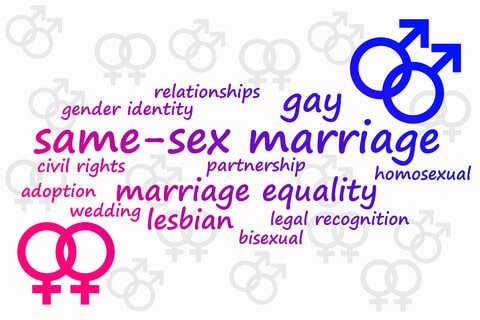
Same Sex MarriageThe first case, Hollingsworth v. Perry is about whether or not Proposition 8, which banned Gay Marriage in California, is unconstitutional. As it stands right now, the 9th District Court struck down Proposition 8 as unconstitutional. On March 26th, the Supreme Court heard oral arguments for this case. In a surprising curveball, Chief Justice Roberts interrupted the Attorney representing supporters of Prop 8, Mr. Charles Cooper, by asking whether or not they even had the right to have their case heard in the Supreme Court. This is known as “standing.” Many Justices then asked follow up questions to see if Mr. Cooper had any evidence of injury, which would qualify him for standing. Obviously, it is unclear whether or not this case will even be argued for its substance, or if it will be dismissed based off procedural findings. Either way, the Supreme Court is about to make a decision that affects, at the very least, the citizens of California and even more so, of the United States.

Does DOMA Violate 5th Amendment?

The second landmark case is United States v. Windsor. This case is about the Defense of Marriage Act (or, DOMA) enacted in 1996. This Act definitively states that, under Federal Law, marriage is between a man and woman. This does not mean that under State Law that same sex couples cannot wed (as of now, anyway). What DOMA does is prevent same sex marriages from receiving the same tax benefits on the federal level that heterosexual couples enjoy. This leads to the major issue in the case, that this act violates the 5th Amendment’s guarantee of equal protection. The Oral Arguments for this case were heard on March 27th, and it will be an interesting case for the entire country.

Contact Us for More Information

The attorneys at Robert E. Hornberger, Esq., P.C. are conscientious about staying abreast of the latest legal matters in Nassau County and Suffolk County Divorce and Family Law Courts on Long Island, NY and are available to answer your questions regarding these matters at any time. For a free private consultation about your needs, contact the experienced attorneys at Robert E. Hornberger, PC at 631-923-1910 or fill out the form on this page and we’ll get right back to you.

Landmark Prenuptial Agreement Case on Long Island

Big Update for Prenuptial Agreements on Long Island

In an unprecedented, landmark ruling, a New York appeals court has upheld a Long Island judge’s decision to void a prenuptial agreement between Elizabeth Cioffi-Petrakis and Peter Petrakis.

History of the Pre-Nup

Pre Nuptial Agreemen on Long Island NYFour days before their marriage, Mr. Petrakis approached Ms. Cioffi-Petrakis with a prenuptial agreement orally stating that if she signed it, once they had kids, he would destroy the prenuptial agreement and add her name onto the deed of the house. Mr. Petrakis told her that he didn’t want to do it, but his lawyers wanted him to protect his business and future. He also stated that if she didn’t sign it, the wedding, for which Ms. Cioffi-Petrakis’ father had already paid $40,000, would be off. Ms. Cioffi-Petrakis signed the prenuptial agreement.  Mr. Petrakas promises were made orally and were not included in any part of the contract and he subsequently went back on his word.

Appeals Court Rules in Favor of Long Island Wife

The Brooklyn Appeals Court agreed with the Nassau County Court that the Prenuptial Agreement was a “fraudulently induced” contract, creating an unprecedented event in the New York Family Law world.

Divorce Proceeds without PreNup

Now that the prenuptial agreement is stricken, the divorce proceeding will move forward, however, this decision will lead to a lot of future litigation regarding “fraudulently induced” prenuptial agreements.

Contact Us for More Information

If you feel that you were lied to in signing a prenuptial agreement, or if you would like more information about Prenuptial Agreements, we can help. The attorneys at Robert E. Hornberger, Esq., P.C. are conscientious about staying abreast of the latest trends in legal matters in Nassau County and Suffolk County Divorce and Family Law Courts on Long Island, NY and are available to answer your questions regarding these matters at any time. For a free private consultation about your needs, contact the experienced attorneys at Robert E. Hornberger, PC at 631-923-1910 or fill out the form on this page and we’ll get right back to you.

Children and Divorce on Long Island NY

Protect Your Children During Your Divorce

Children & DivorceIt’s unfortunate, but as a Long Island divorce attorney, I see the negative effects of divorce on children nearly every day. It’s no secret that kids can be adversely affected by a divorce, particularly when parents allow their own anger at their spouse to be directed or funneled through their children. What parents don’t always understand is that it is often their own actions that cause the trauma of divorce to be taken out on their children.

A recent article by Kara Bishop for the Huffington Post, revealed the results of a surveyed number of children whose parents are going through a divorce and what rules they would prefer their divorcing parents follow. From my own experience as a divorce attorney on Long Island, I can tell you that Ms. Bishop is right: parents often don’t realize the pain they inflict on their children by using them as quasi-pawns in their divorce.

You must make an effort to keep your children out of the divorce equation as much as possible, before, during and after your divorce. Attempting to influence your child against your spouse is likely to backfire and cause resentment against you and can cause severe emotional distress in your child.

While you may harbor deep anger and resentment at your spouse, you should do your best to keep this from your children. You should, at all costs, keep yourself from pressuring your children to choose sides or make them feel guilty for wanting to see their other parent. It can cause serious damage to a child’s psyche to be utilized as a game piece at any time during and after your divorce. You must do your absolute best to remain cordial and respectful to your spouse or ex-spouse in front of your children at all times. Not doing so makes you look bad in front of your child and teaches them that you are not willing or able to put them first.

Children can suffer immense pain watching their parents go through a divorce if their parents let them. Couples need to take extra care to make sure their children do not feel “used” or any less loved  just because their parents are no longer married.

Contact Us for More Information

There are a number of methods and strategies to obtaining a divorce. Some divorce methods, like divorce mediation, can sometimes be beneficial to helping you and your spouse maintain a more positive relationship for your children during and after your divorce. If you have any questions regarding how to best protect your children during your divorce, give us a call at 631-923-1910. The divorce law office of Robert E. Hornberger, P.C. will be pleased to offer you a free complimentary consultation to discuss any aspect of your divorce.

Financial & Insurance Issues of Long Island NY Divorce

Protect Your Finances & Health During Your Divorce

Protecting Assets During Long Island NY DivorceAs a Divorce Attorney on Long Island, I’ve helped hundreds of couples navigate the often rocky road through their divorce proceedings. From simple, uncontested divorces through complex litigated divorces, there are a myriad of complex legal, emotional and financial issues that must be resolved to finalize your divorce and move on with your life.

While the family and divorce law firm of Robert E. Hornberger can help you with the legal issues surrounding your divorce and help you divide your assets, we often recommend that you seek the advice of a qualified financial planner to help you with your ongoing financial needs.

To protect yourself and set yourself up for success, it’s critically important to keep track of your financial records during a divorce and there are a few specific areas of concern.

Establish or Maintain Your Credit

It’s important as you go through your divorce, that you establish or maintain your credit worthiness. Couples going through a divorce often struggle to obtain credit because theirs assets and credit are often tied up with their spouse’s. You should attempt to acquire bank and department store cards in your own name, apart from being an authorized user on your spouse’s cards. In addition to protecting your credit score, you will also ensure that your spouse is not able to cancel your cards and cut off your access to credit when you may need it most.

Keep Cash on Hand

Another good practice is to make sure you have cash on hand. If you haven’t filed divorce papers yet and still live with your spouse, it’s important to make sure that you have access to cash. Legal fees, court costs and new living expenses can drain any account. Keep in mind that the money that used to support one household will now have to be divided into two.

Maintain Your Health Insurance

Another often overlooked are of exposure is your insurance policies. It is recommended that you thoroughly review, and ask your attorney to review, your insurance policies and your insurance needs. While going through your divorce you will want to make sure that you are still entitled to medical benefits. Make sure to talk to your attorney regarding your health insurance coverage, especially if your spouse provides you with health insurance. In most divorce cases, the spouse receiving medical insurance from the other spouse is likely to lose their coverage if it is not specifically addressed in your divorce or separation agreement. Be sure to discuss your needs with your attorney.

Contact Us for More Information

The Divorce and Family Law Firm of Robert E. Hornberger, P.C. is experienced protecting the financial and insurance needs of our clients. If you have any questions regarding these issues, we will be delighted to assist you. Give us a call at 631-923-1910 to schedule a free complimentary consultation to discuss your needs and options.

Qualified Domestic Relations Orders Long Island NY

What You Need to Know About Qualified Domestic Relation Orders During Your Divorce

Retirement Planning in Long Island NY DivorceAs a divorce attorney practicing primarily in the Nassau County and Suffolk County Supreme and Family Courts in NY, I work with many couples who have complex financial matters to divide in their divorce settlement. While some property and assets are relatively simple to split up, one of the most complex aspects of a divorce settlement can be the division of retirement or pension plans. These plans fall under the terms of a Qualified Domestic Relations Order or QDRO.

QDRO and ERISA

A Qualified Domestic Relations Order (QDRO) is a legal order subsequent to a divorce or legal separation that splits and changes ownerships of a retirement plan to give the divorced spouse their share of the asset or pension plan. QDRO’s are only subject to employee benefit or pension plans subject to the Employee Retirement Income Security Act (ERISA), which is the law that governs private sector pensions. These orders provide for marital or community property division between the participant and the alternate payee. A QDRO also qualifies for the payment of alimony or child support to the alternate payee.

The QDRO must meet the following requirements:

1. Contain the names and mailing addresses of the Participant and Alternate Payee

2. Clearly set forth the amount or percentage of the Participant’s benefits

3. Set forth the number of payments or period to which the Order applies

4. Refer to each Plan to which the Order applies

5. NOT require a Plan to pay any type or form of benefit, or any option not otherwise provided under the Plan

6. NOT require the Plan to provide increased benefits determined on the basis of actuarial value

7. NOT require a Plan to pay benefits to an Alternate Payee that are required to be paid to another Alternate Payee under another Order previously determined to be a QDRO.

Orders relating to these non-ERISA Plans are not “Qualified” and are simply called “Domestic Relations Orders” or DROs. They may be subject to state law or agency policy prior to acceptance and approval by the governmental plan.

QDROs can be difficult to properly utilize because every Plan is different and may contain different benefits, survivorship options, terms and procedures for administration and are constantly changing.

Contact Us for More Information

If you have any questions regarding how a pension or retirement account should be divided in your divorce or separation agreement, give us a call at 631-923-1910. The divorce law office of Robert E. Hornberger, P.C. will be pleased to offer you a free complimentary consultation to discuss your options.

Child Support in Nassau, Suffolk, Long Island, New York

Your Child Support on Long Island Questions Answered

chld support on long island nyAs a Divorce Attorney on Long Island, I regularly counsel clients on issues of Child Support and Child Custody in both Nassau and Suffolk Counties.

Long Island Family Courts, under the jurisdiction of New York State law, have ruled that children are entitled to proper child support from their parents, even if the parents aren’t living together. In New York State, the standard passed by law requires a minimum amount of money paid to the custodial parent based on the gross annual income of both parties. The breakdown is then multiplied by the following percentages:

  • 17% for one child
  • 25% for two children
  • 29% for three children
  • 31% for four children
  • No less than 35% for five or more children

The basic child support obligation is then divided proportionately between the parents, based on their respective incomes.  In order to make sure the custodial parent gets paid promptly, child support orders that payments be immediately withheld from the wages or other income of the obligated parent, unless there is some other type of agreement between the parties.

If a parent doesn’t pay, there are different punishments that can be implemented, including suspension of the parent’s driver’s license, an intercept of a tax return or lottery winning of $600 or more, and of course, obtaining a money judgment in court. In other circumstances, the state can freeze the obligated parent’s bank account, IRA, or other financial assets to seize the amount owed.  As a final resort, they can also send the parent to jail if they believe no other type of enforcement would be effective.

Contact Us for More Information

If you have any questions regarding Child Support or Child Custody on Long Island, give us a call at 631-923-1910. The divorce law office of Robert E. Hornberger, P.C. will be pleased to offer you a free complimentary consultation to discuss your Child Support or any other divorce or family law issues.

Robert E. Hornberger, Esq., P.C., 20 Broadhollow Road, Suite 1005, Melville, New York 11747 | 631.923.1910
All Rights Reserved 2012 | Privacy Policy | Sitemap | Built and Powered by WSI
Attorney Advertising. This web site is designed for general information only.
The information presented at this site should not be construed to be formal legal advice nor the formation of a lawyer/client relationship.