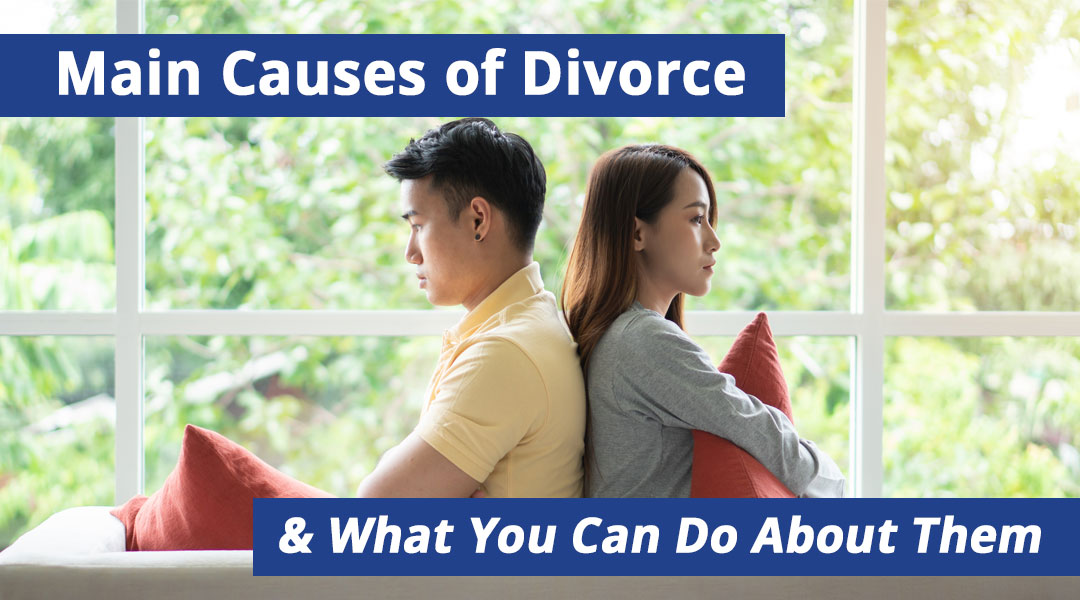
What are the Main Causes for Divorce on Long Island, NY

What are the Main Causes for Divorce on Long Island, NY

What are the Main Causes for Divorce on Long Island, NY

Encompassing both Nassau county and Suffolk county, Long Island, NY, presents unique challenges that impact marriage and divorce. The socioeconomic and cultural dynamics of Long Island significantly influence divorce trends here. With our proximity to Manhattan, the Island’s vibrant mix of both urban and suburban settings contributes to diverse lifestyles and expectations within marriages that can contribute to the main reasons for divorce on Long Island, NY.

As a seasoned divorce lawyer practicing exclusively on Long Island for over 20 years, I have witnessed firsthand how economic pressures, cultural differences, and personal aspirations all contribute to the reasons for divorce in on Long Island. Understanding these causes is crucial for anyone contemplating or navigating a divorce on Long Island. By examining these elements, individuals can gain insights into potential stressors that may impact their relationships and potentially make adjustments to save their marriages.

Economic Strain and Financial Disparities

Throughout the United State, economic challenges often play a pivotal role in marital discord, particularly in places with a high cost of living like Long Island. The financial demands of maintaining a household in such an environment can strain even the most stable relationships. Disparities in income, financial mismanagement, or unexpected economic downturns can exacerbate marital tensions, leading couples to seek legal separation as a solution. The pressure to meet financial obligations can lead to arguments and resentment, creating a hostile environment that undermines marital harmony.

  1. High Cost of Living: Long Island’s high cost of living can place immense pressure on couples, especially when financial planning and budgeting become contentious issues. The need to balance housing costs, education, and daily expenses can lead to ongoing stress within a marriage. Disagreements over spending, saving, and financial goals often lead to irreparable rifts. Couples may find themselves unable to meet expectations, leading to feelings of inadequacy and blame.
  2. Job Loss and Employment Instability: Economic instability and job loss can result in financial stress, altering the family’s dynamics and increasing the likelihood of divorce as couples struggle to maintain their standard of living. The uncertainty surrounding employment can create fear and anxiety, impacting each spouse’s emotional well-being. As financial pressures mount, couples may find their communication breaking down, resulting in a cycle of conflict and misunderstanding.
Free New York Divorce Lawyer Consultation
divorce causes sunset dock

Communication Breakdown Can Cause Divorce

Communication is the cornerstone of any healthy relationship, so a lack of communication is often cited as a primary cause of divorce. Effective communication requires openness, empathy, and understanding, which can be challenging to maintain over time, especially when other stressors enter the picture. Miscommunication, lack of communication, or ineffective communication often create misunderstandings and emotional distance between partners This emotional distance can lead to feelings of isolation and dissatisfaction, eroding the foundation of the relationship and leading to divorce.

Emotional and Psychological Factors

  1. Emotional Neglect and Infidelity: Emotional neglect, where one partner feels ignored or undervalued, is a significant cause of divorce. The absence of emotional support can lead to a sense of loneliness and resentment. Sadly, these feelings all too often lead to infidelity, as one or both partners seek emotional fulfillment outside the marriage. This breach of trust can be devastating, making reconciliation difficult.
  2. Mental Health Issues: Mental health challenges, such as depression or anxiety, can strain a marriage if not addressed with professional help. The impact of mental health on a relationship can be profound, affecting daily interactions and overall happiness. Unfortunately, the stigma that is still associated with mental health issues often prevents couples from seeking assistance, exacerbating the problem. Without intervention, these challenges can lead to a breakdown in communication and connection.

Lifestyle and Personal Differences Can Cause Divorce

Long Island’s diverse cultural landscape can lead to lifestyle and personal differences that contribute to a breakdown of the marriage. The blend of different cultures and backgrounds that may have brought the couple together and which can really enrich a relationship can also present challenges if not managed with care. As the marriage matures, couples may find themselves at odds over lifestyle choices, parenting styles, or religious beliefs.

  1. Cultural and Religious Differences: Differences in cultural backgrounds or religious beliefs can lead to conflicts if not navigated with mutual respect and understanding. A failure to embrace and integrate diverse perspectives into the marriage can result in misunderstandings and resentment. Successful relationships require a willingness to compromise and appreciate the value each partner’s unique background brings to the relationship.
  2. Disparate Life Goals: As individuals grow and evolve, they may develop differing life goals and aspirations. Personal growth is natural, but it can lead to divergence if not aligned with a partner’s vision. When couples fail to align on key issues such as career ambitions, family planning, or retirement goals, the marriage may suffer. Open dialogue between partners and shared planning for the future are essential to bridging these gaps and strengthen the marriage.
Free New York Divorce Lawyer Consultation

Legal and Procedural Considerations of Divorce on Long Island, NY

Understanding the legal landscape of divorce proceedings on Long Island is essential for individuals navigating what can be a very challenging process. The complexities of the New York legal system can be overwhelming, particularly for those unfamiliar with the intricacies of family law. The legal system in Nassau county and Suffolk county is designed to address the complexities of divorce, but it can be daunting without proper guidance. Familiarity with legal procedures and requirements can ease the stress of the process, ensuring a more efficient resolution.

divorce causes kissing couple

The Role of Mediation and Collaborative Divorce

Divorce mediation and collaborative divorce are alternatives to traditional litigation that can mitigate conflict and promote amicable resolutions in your divorce. These approaches prioritize cooperation and communication, offering a less adversarial path to ending your marriage.

Benefits of Mediation

  1. Cost-Effective: Divorce mediation is generally less expensive than litigation because it involves fewer legal fees and court costs. The focus on negotiation and compromise can lead to quicker resolutions, which reduces the expenses for legal fees. This cost-effectiveness can be particularly beneficial for couples seeking to preserve financial resources for post-divorce life.
  2. Privacy and Confidentiality: Divorce mediation sessions are private, ensuring that personal matters remain confidential. Unlike court proceedings, which are public, mediation allows for discretion and sensitivity in handling personal issues. This privacy can encourage open and honest dialogue, leading to more satisfactory outcomes.
  3. Less Stressful. Divorce Mediation is often much less emotionally stressful than divorce litigation. Because you and your partner are communicating directly with the help of your divorce mediator, you can avoid or mitigate the adversarial nature of a litigated divorce where most communication happens between opposing divorce attorneys.
  4. Post-Divorce Communication. If you have children together, you will likely be in each other’s lives for the foreseeable future. Because divorce mediation focuses on open communication and negotiation, rather than fighting it out in court, couples often have a better relationship and communication post-divorce. This can be especially beneficial for your children as they see mommy and daddy talking and not fighting.

Collaborative Divorce

  1. Team Approach: Collaborative divorce involves a team of professionals, including attorneys, financial advisors, and therapists, working collaboratively to reach a settlement. This multidisciplinary support provides comprehensive guidance, addressing both legal and emotional needs. The collaborative process fosters a sense of partnership and shared responsibility, reducing conflict and promoting positive interactions.
  2. Focus on Cooperation: This approach fosters cooperation and communication, which can be beneficial for couples with children, as it sets a positive precedent for co-parenting. Establishing effective communication during divorce can lay the groundwork for future interactions, benefiting all family members. The emphasis on mutual respect and understanding can lead to more sustainable agreements and healthier post-divorce relationships.

The Main Causes of Divorce on Long Island are Rooted in Communication

Divorce is a multifaceted process, influenced by a myriad of factors ranging from economic strain to cultural and personal differences. Each marriage is unique, and understanding these influencing factors can provide insight into the underlying causes of marital breakdown. Understanding the main causes of divorce on Long Island, NY, can empower individuals to approach their situation with greater clarity and confidence. Armed with this knowledge, individuals can make informed decisions that reflect their needs and priorities.

divorce causes happy family

How Your Divorce Lawyer Can Help

As a seasoned professional in family law, I emphasize the importance of personal attention, prompt communication, and tailored solutions for every client. All Hornberger Verbitsky, PC. clients deserve compassionate and dedicated representation to navigate the complexities of their divorce. Whether through traditional litigation or alternative methods like mediation or collaborative divorce, our commitment is to guide clients through the complexities of divorce with compassion and sensitivity. The goal of each of our attorneys is to support clients in achieving resolutions that represent their values and future aspirations.

If you find yourself navigating the challenging waters of divorce, seek the guidance of an experienced family law attorney who can provide the support and expertise you need. Professional and experienced legal support can make a tremendous difference in the outcome of your divorce proceedings. Remember, you are not alone in this journey, and with the right guidance, you can emerge stronger and more resilient. Taking proactive steps and seeking the right resources can lead to a more positive and manageable experience.

Free Consultation and Case Evaluation with Experienced Divorce Lawyers

The Long Island, NY divorce and family law firm Hornberger Verbitsky, P.C. has over 20 years of experience helping its clients navigate the divorce process in New York. Our firm offers a free consultation and case evaluation to discuss your divorce over the phone, in our offices or over the Internet. During this initial meeting, we will listen to your concerns, answer your questions, and outline the steps involved in managing your divorce. Our goal is to provide you with clarity and confidence as you navigate this challenging time.

Schedule a free consultation and case evaluation with an experienced Long Island divorce lawyer to discuss your case and learn how we can help. We will answer your questions, explain your legal options, and help you understand your rights. Contact Hornberger Verbitsky, P.C. today at 631-923-1910 or fill out the short form below for your complimentary consultation and case evaluation.


Free New York Divorce Lawyer Consultation
I would give 6 stars if I could. I can’t say enough good things about Robert and his firm. We were in a situation for over 2 years and I could have never made it through without Robert’s experience and knowledge. He guided me through tough times when needed and his expertise could “read” the situation and make the next best move for me. He was tough when he needed to be tough (thankfully) and at the same time guided me through the process to make me feel comfortable in an uncomfortable situation. I would not want to go through this process without Robert and his team having my back. he helped move the case along and not waste any time or money. One last time, I 100% endorse Robert and his expertise.

~ Paul Carmichael


Frequently Asked Questions About the Main Causes of Divorce on Long Island, NY

Q: What are the legal grounds for divorce in Long Island, NY?

A: Long Island recognizes both fault and no-fault grounds for divorce. Understanding the grounds for divorce is crucial for determining the appropriate legal approach. No-fault divorce, based on an irretrievable breakdown of the marriage, is the most common. Fault grounds include adultery, abandonment, and cruel and inhuman treatment, each requiring specific evidence and legal consideration.

Q: How can a family law attorney assist in the divorce process?

A: An experienced family law attorney can provide essential guidance throughout the divorce process, offering personalized solutions and ensuring that your rights and interests are protected. Seasoned legal expertise is invaluable in navigating complex issues such as asset division, child custody, child support and spousal support. A legal team with experience in Nassau county and Suffolk County courtrooms can facilitate communication, negotiate settlements, and represent your best interests in court. Your divorce lawyer’s support can alleviate stress and provide clarity during an emotionally charged time.​


GET YOUR FREE CONSULTATION TODAY Call 631-923-1910 or fill in the form below

Horberger Verbitsky, P.C. partners Robert E. Hornberger, Esq. and Christine M. Verbitsky, Esq.

Horberger Verbitsky, P.C. partners Robert E. Hornberger, Esq. and Christine M. Verbitsky, Esq.

Get your complimentary consultation and case evaluation with our experienced attorneys today. Your attorney will describe the many options available and determine together which is the right solution for you. By the end of this  conversation, we’ll all understand how we can best help you to move forward.

No Cost or Obligation

There is no cost or obligation for this initial consultation. It is simply an opportunity for us to get to know each other, answer your questions and learn if Hornberger Verbitsky, P.C. is right the right law firm for you. Give us a call at 631-923-1910 or fill in the short form below for your free consultation and case evaluation. All Fields Are Required

About the Author

Robert E. Hornberger, Esq., Founding Partner, Hornberger Verbitsky, P.C.

  • Over 20 years practicing matrimonial law
  • Over 1,000 cases successfully resolved
  • Founder and Partner of Hornberger Verbitsky, P.C.
  • Experienced and compassionate Long Island Divorce Attorney, Family Law Attorney, and Divorce Mediator
  • Licensed to practice law in the State of New York
  • New York State Bar Association member
  • Nassau County Bar Association member
  • Suffolk County Bar Association member
  • “Super Lawyer” Metro Rising Star
  • Nominated Best of Long Island Divorce Attorney four consecutive years
  • Alternative Dispute Resolution Committee Contributor
  • Collaborative Law Association of New York – Former Director
  • Martindale Hubbell Distinguished Designation
  • America’s Most Honored Professionals – Top 5%
  • Lead Counsel Rated – Divorce Law
  • American Institute of Family Law Attorneys 10 Best
  • International Academy of Collaborative Professionals
  • Graduate of Hofstra University School of Law
  • Double Bachelor’s degrees in Philosophy, Politics & Law and History from SUNY Binghamton University
  • Full Robert E. Hornberger, Esq. Bio

RECOGNIZED FOR EXCELLENCE BY:

BBB Accreditation A+
10 Best Family Law Attorney Award 2022 - American Institute of Family Law Attorneys
Avvo 10.0 Rating - Robert Eugene Hornberger Top Divorce Attorney
Super Lawyers Rising Stars - Robert E. Hornberger
5-Star Avvo Reviews – Robert Eugene Hornberger
Lead Counsel Verified Family Law Attorney Badge
Avvo Clients’ Choice Award 2020 – Robert Eugene Hornberger
Lead Counsel Rated Attorney – Verified Professional Distinction
Distinguished Peer Rating 2023 – High Professional Achievement


Google Reviews for Robert Hornberger, Divorce Attorney


Successful Divorce Strategies Free eBook


Child Support & Spousal Maintenance Tools
Spousal Maintenance Calculator
Child Support Calculator
Hornberger Verbitsky, P.C. respects your right to privacy. We will never sell your information to any third party. Follow this link to read our full privacy policy.

How to Divorce a Narcissist on Long Island, NY

How to Divorce a Narcissist on Long Island, NY

How to Divorce a Narcissist on Long Island, NY

Divorcing a narcissist on Long Island, NY is understandably emotionally draining. However, understanding the right strategies to combat the narcissist can help you navigate your divorce more effectively and less emotionally painful. Keep reading to learn how to recognize if you are divorcing a narcissist and understand how a narcissist will likely behave during your divorce. In this article you will learn what problems narcissists can cause in a divorce, how to avoid common mistakes and learn strategies for how to deal with divorcing a narcissist in New York.

Before we delve into how to divorce a narcissist, let’s understand what narcissism is and how to recognize a narcissist.

What is Narcissism?

Narcissism is described as an inflated sense of self-importance, a need for excessive attention and admiration, and a lack of empathy. Narcissists exhibit are grandiose, have a sense of entitlement, and a tendency to exploit relationships for themselves.

If you understanding these traits you will have an easier time navigating your divorce. You will be able to recognize the manipulation and emotional abuse being inflicted on you by your narcissistic spouse during your divorce. If you are aware of these patterns, you will be better prepared and be able to develop strategies to protect yourself and your emotional health as you navigate the divorce process in New York state.

How to Recognize a Narcissist

Recognizing a narcissist in your divorce is a challenging, especially since you’ve likely been dealing with this person for a long time. Add in the strong emotions a divorce involves and it becomes even more difficult to combat the narcissists tactics.

Narcissists tend to avoid accountability while exhibiting a need for constant validation. They will likely belittle or dismiss your feelings. The narcissist may also exhibit a pattern of “gaslighting”, where they distort reality to make you question your perceptions.

Pay attention to how the narcissist reacts to criticism or perceived slights; a narcissist will often respond with anger or defensiveness rather than introspection. If you can identify these behaviors, you will be better prepared for the emotional rollercoaster that accompanies a divorce from a narcissist. You will be able to approach your divorce with a clearer and more objective mindset.

Free New York Divorce Lawyer Consultation
Narcissist Divorce fight

How Will a Narcissist Behave During Your Divorce?

A narcissist may employ a number of tactics to undermine your confidence and manipulate the situation to their advantage during your divorce. Narcissists are prone to emotional outbursts. They might threaten you or try to provoke you into reacting in a way that can be used against you later.

You must try to remain calm and composed when dealing with a narcissist. They will do anything to elicit an emotional response from you and then exploit that response for their gain. If you can maintaining a level-headed approach, you can protect yourself from strong emotions and position yourself as the more stable party in the eyes of a New York state court. When you anticipate the narcissist’s behaviors you can prepare your responses in advance and navigate your divorce with greater control and less emotional turmoil.

What to Expect When Divorcing a Narcissist in New York

When divorcing a narcissist in New York, you should expect a number of emotional and legal challenges that will differ from a typical divorce. The narcissist will likely attempt to manipulate the narrative, portraying themselves as the victim while undermining your credibility. This will most likely lead to a contentious divorce. They will attempt to use tactics such as intimidation or emotional blackmail to gain the upper hand in the divorce. It’s critical to prepare yourself for these scenarios by carefully gathering evidence of the behavior and seeking the support of experienced professionals who understand the intricacies of the narcissistic personality and New York state law. If you can anticipate these challenges, you will be better equipped to handle your emotions and the legal difficulties that will may arise during your divorce process.

Problems Narcissists Can Cause in a Divorce

Narcissists are likely to create a number of problems for you during you divorce. Rather than negotiate in good faith, they will attempt to manipulate and emotionally abuse you to maintain their control. They may stonewall and refuse to communicate or cooperate. This makes it difficult to reach agreements on important issues like asset division, spousal support or child custody.

The narcissist will also try to turn friends and family against you. They will spread misinformation and lies to undermine your friends and family’s support of you. These actions often create prolonged legal battles, driving up the cost and length of your divorce, not to mention increased emotional stress for you.

If you can recognize these challenges ahead of time, you can create strategies to stay focused on your goals throughout the divorce process.

What Are the Stages of Divorcing a Narcissist?

Divorcing a narcissist usually involves several emotional and strategic phases.

In the first stage, you will likely feel a sense of disbelief or denial as you come to terms with the reality of the situation.

The second stage usually involves a period of intense emotional distress, anger, sadness, and frustration.

As you progress through the stages, it will be very important to keep on the concrete practicalities of the divorce process. Rather than react emotionally to the narcissist’s threats and other tactics of the narcissist, focus on the practical matters that need to be addressed to conclude your divorce.

This is where an experienced divorce attorney can be of tremendous assistance. Your divorce attorney doesn’t have the emotional “baggage” you do and can look at your divorce with the clear perspective to deal with the issues at hand. They will help you understand your legal rights and cut through the “garbage” your narcissistic spouse may be trying to throw in the way of concluding your case. An experienced divorce attorney can help you gather the necessary documentation you need to progress your divorce and develop a clear plan for moving forward.

Seeking emotional support from a therapist or a divorce support group can help you understand your feelings and develop coping strategies to deal with them. It’s important that you prioritize your mental health and well-being during this challenging time of your life.

Throughout the stages of divorcing a narcissist, it’s important to maintaining a support network of friends, family, or professionals. These people can provide you with the support, encouragement and perspective you need to navigate the complexities of effectively divorcing a narcissist in New York.


Free New York Divorce Lawyer Consultation

How to Deal with a Narcissist in Divorce on Long Island, NY

As we delve deeper into the challenges of divorcing a narcissist, it becomes clear that understanding the narcissist’s personality is important to develop and apply specific strategies to combat it.

Understanding of the narcissist’s tactics enhances your ability to analyze complex situations but empowers you to make informed decisions without the emotional manipulation of your narcissistic spouse. By combining the following framework with practical experience, you can turn knowledge into action, which can lead to a more successful outcome for you in your divorce.

Establish Firm Boundaries

Establishing firm boundaries and sticking to them can help smooth your divorce from a narcissist. Narcissists always attempt to manipulate situations to retain control of a situation. By keeping firm boundaries and documenting all of your interactions with your spouse before and during your divorce is critical to your success. If you can document all interactions, you will have a clear and compelling record of any abusive behavior or manipulation directed toward you.

How To Minimize Direct Contact with a Narcissist

To protect yourself from being manipulated, it’s important to minimize direct communication with your narcissist spouse whenever possible. Rather than speak with your spouse on the phone or in person, use written forms of communication such as email or text messages. This will prevent the narcissist’s attempts to manipulate you verbally when you don’t have the time to prepare your responses without emotion.

By communicating only in writing, you will be able to think through and edit your responses before sending them. This will prevent you from saying something that could hurt your case while maintaining a record of your conversations with all of the important details. Communicating in writing, where you have time to think, reduces the chances of being drawn into an emotional confrontation and saying something that could hurt your case.

Of course, you will likely have to communicate with your spouse during your divorce. Whenever possible, you should try to keep these communications through your legal representative. If you have children together, you will likely not be able to keep all communication through your lawyer. Coordinating visitation schedules, school activities and the like will require you to have contact with the children’s other parent. When you must have communication with the other parent, keep your messages clear, concise, and focused on the necessary topics. Don’t get drawn in to any personal discussions that could be used against you in court.

By keeping all your communications with your spouse clear and documented, you will protect your emotional well-being while limiting the narcissist’s ability to manipulate you.

Document All Interactions with the Narcissist

Creating detailed records of all communication with the narcissist is very important in your divorce case. Be sure to keep records of all emails, text messages, and, if necessary, any verbal agreements made during discussions with your spouse. This documentation can provide concrete evidence should disputes arise in court and also serve as a protective measure against false accusations.

If you can document clear and organized accounts of all your communications, you will present a stronger case in court. If you can clearly demonstrate the narcissist’s patterns of behavior and their impact on the divorce proceedings you will be more in control and prepared. This preparation can remove a lot of the nervousness and fear you may experience as you navigate the complexities of the divorce process in New York.


Narcissist Divorce argument

Narcissists, Child Custody and Visitation

As we indicated earlier, child custody and visitation will likely require you to have some contact with your spouse during your divorce process. This communication can lead to conflict when dealing with a narcissist that needs to control everything their way.

One way to minimize a narcissist’s attempts to manipulate child custody and visitation is to create a detailed parenting plan in writing. The parenting plan should outline specific schedules, responsibilities, and how you will communicate to arrange child custody and visitation arrangements. By having a written agreement in place ahead of time, you will limit the narcissist’s ability to manipulate situations when you have to deal with them for the sake of the children. Your written parenting plan ensures clarity for all parties and reduces the opportunities for conflict between you.

Co-Parenting Apps Help Minimize Conflict

Establishing clear communication is important in dealing with day-to-day child custody and visitation issues. Dedicated email accounts and, even better, co-parenting apps used solely for discussions related to the children are very helpful. Co-parenting apps minimize the opportunity for emotional escalation and conflict when it comes to the children, by keeping all communication documented and well-organized.

Having a clear and structured method of communication with your spouse can help ensure that all conversations are focused on the children’s needs and are well documented in writing. If a dispute should arise between you, the app will clearly show the agreement and the communication regarding the dispute. Having this in writing can be very beneficial if the dispute should go to court. Using tools like parenting apps and tactics like keeping all communication in writing, reinforces your commitment to co-parenting effectively, and protects you from the narcissist’s attempts to provoke or emotionally manipulate you.

How To Avoid Mistakes When Divorcing a Narcissist

Narcissists are excellent manipulators. They have many tools to get you to make a mistake that can be costly in your divorce negotiations.

One common mistake people make when divorcing a narcissist is underestimating the power of their manipulative tactics. Don’t fall into the trap of believing that simply presenting the facts is enough to convince a court of the narcissist’s behavior. Narcissists are skilled at twisting narratives and presenting themselves as the victim. This behavior can lead to confusion and doubt even among experienced professionals.

You must remain alert and actively documenting all interactions of their behavior to be used as evidence if necessary. Having the documentation will strengthen your case and help you maintain clarity about the reality of the situation. This is important to prevent yourself from being caught up in the narcissist’s web of deceit.

Get Experienced Legal Help When Divorcing a Narcissist

When divorcing a narcissist, it’s important to enlist the help of an experienced divorce lawyer who understands the dynamics of dealing with narcissists. A lawyer experienced in high-conflict divorces will provide you with the clear guidance you need to navigate the legal complexities of the divorce process while safeguarding your interests. They can help you formulate a strategy that minimizes the narcissist’s ability to exploit the situation. An experienced divorce lawyer can ensure that you are well-prepared for negotiations and any necessary court appearances. Of course, having an advocate by your side that understands the complexities of divorce on Long Island, NY will bolster your confidence and provide you with the reassurance you need during a time will likely be overwhelming alone.

Free Consultation and Case Evaluation with Experienced Divorce Lawyers

The Long Island, NY divorce and family law firm Hornberger Verbitsky, P.C. has over 20 years of experience helping its clients navigate the divorce process in New York. We have dealt with every type of divorce personality in our practice and understand the complexities of dealing with narcissistic personalities. Our firm offers a free consultation and case evaluation to discuss your divorce over the phone, in our offices or over the Internet. During this initial meeting, we will listen to your concerns, answer your questions, and outline the steps involved in managing your divorce. Our goal is to provide you with clarity and confidence as you navigate this challenging time.

Schedule a free consultation and case evaluation with an experienced Long Island divorce lawyer to discuss your case and learn how we can help. We will answer your questions, explain your legal options, and help you understand your rights. Contact Hornberger Verbitsky, P.C. today at 631-923-1910 or fill out the short form below for your complimentary consultation and case evaluation.

Free New York Divorce Lawyer Consultation
I would give 6 stars if I could. I can’t say enough good things about Robert and his firm. We were in a situation for over 2 years and I could have never made it through without Robert’s experience and knowledge. He guided me through tough times when needed and his expertise could “read” the situation and make the next best move for me. He was tough when he needed to be tough (thankfully) and at the same time guided me through the process to make me feel comfortable in an uncomfortable situation. I would not want to go through this process without Robert and his team having my back. he helped move the case along and not waste any time or money. One last time, I 100% endorse Robert and his expertise.

~ Paul Carmichael


GET YOUR FREE CONSULTATION TODAY Call 631-923-1910 or fill in the form below

Horberger Verbitsky, P.C. partners Robert E. Hornberger, Esq. and Christine M. Verbitsky, Esq.

Horberger Verbitsky, P.C. partners Robert E. Hornberger, Esq. and Christine M. Verbitsky, Esq.

Get your complimentary consultation and case evaluation with our experienced attorneys today. Your attorney will describe the many options available and determine together which is the right solution for you. By the end of this  conversation, we’ll all understand how we can best help you to move forward.

No Cost or Obligation

There is no cost or obligation for this initial consultation. It is simply an opportunity for us to get to know each other, answer your questions and learn if Hornberger Verbitsky, P.C. is right the right law firm for you. Give us a call at 631-923-1910 or fill in the short form below for your free consultation and case evaluation. All Fields Are Required

About the Author

Robert E. Hornberger, Esq., Founding Partner, Hornberger Verbitsky, P.C.

  • Over 20 years practicing matrimonial law
  • Over 1,000 cases successfully resolved
  • Founder and Partner of Hornberger Verbitsky, P.C.
  • Experienced and compassionate Long Island Divorce Attorney, Family Law Attorney, and Divorce Mediator
  • Licensed to practice law in the State of New York
  • New York State Bar Association member
  • Nassau County Bar Association member
  • Suffolk County Bar Association member
  • “Super Lawyer” Metro Rising Star
  • Nominated Best of Long Island Divorce Attorney four consecutive years
  • Alternative Dispute Resolution Committee Contributor
  • Collaborative Law Association of New York – Former Director
  • Martindale Hubbell Distinguished Designation
  • America’s Most Honored Professionals – Top 5%
  • Lead Counsel Rated – Divorce Law
  • American Institute of Family Law Attorneys 10 Best
  • International Academy of Collaborative Professionals
  • Graduate of Hofstra University School of Law
  • Double Bachelor’s degrees in Philosophy, Politics & Law and History from SUNY Binghamton University
  • Full Robert E. Hornberger, Esq. Bio

RECOGNIZED FOR EXCELLENCE BY:

BBB Accreditation A+
10 Best Family Law Attorney Award 2022 - American Institute of Family Law Attorneys
Avvo 10.0 Rating - Robert Eugene Hornberger Top Divorce Attorney
Super Lawyers Rising Stars - Robert E. Hornberger
5-Star Avvo Reviews – Robert Eugene Hornberger
Lead Counsel Verified Family Law Attorney Badge
Avvo Clients’ Choice Award 2020 – Robert Eugene Hornberger
Lead Counsel Rated Attorney – Verified Professional Distinction
Distinguished Peer Rating 2023 – High Professional Achievement


Google Reviews for Robert Hornberger, Divorce Attorney


Successful Divorce Strategies Free eBook


Child Support & Spousal Maintenance Tools
Spousal Maintenance Calculator
Child Support Calculator
Hornberger Verbitsky, P.C. respects your right to privacy. We will never sell your information to any third party. Follow this link to read our full privacy policy.

Is there Common Law Marriage in New York?

Is there Common Law Marriage in New York?

Is there Common Law Marriage in New York?

Navigating the complexities of family law can be a daunting task, especially when it comes to understanding the intricacies of common law marriage in New York.

This article aims to shed light on this often misunderstood concept. It will provide a comprehensive overview of the legal status and implications of common law marriage in the state of New York.

We will delve into the historical context, current legal stance, and the exceptions where New York may recognize common law marriages from other states. We will also explore the legal implications of the absence of common law marriage recognition in New York.

Our goal is to provide clear, authoritative information to help you navigate these complex legal waters. Whether you are cohabitating without formal marriage, considering divorce, or seeking to understand your marital status and rights, this guide is for you.

What is Common Law Marriage?

Common law marriage is a term that often causes confusion. It refers to a marriage that is considered valid by both partners, but without a formal ceremony or marriage license.

In some states, common law marriage is recognized if certain conditions are met. These conditions typically include cohabitation for a specific period, presenting themselves as a married couple, and the intent to be married.

Understanding Common Law Marriage in New York

However, the situation is different in New York. New York State does not recognize common law marriages. This means that couples who live together without a formal marriage are not considered legally married, regardless of how long they have been together.

This lack of recognition can have significant implications for couples, particularly in matters of property rights, child custody, and inheritance.

Free New York Divorce Lawyer Consultation

Historical Context and Current Legal Status of Common Law Marriage

Historically, common law marriage was recognized in many parts of the United States. It was seen as a practical solution for couples who could not afford a formal wedding or who lived in remote areas without access to a clergyman or justice of the peace.

However, over time, most states, including New York, abolished common law marriage. The reasons for this vary, but they often include concerns about legal clarity and the potential for abuse.

Today, New York’s Domestic Relations Law governs marriage in the state. It requires couples to obtain a marriage license and participate in a formal ceremony to be legally married.

What’s the Difference between Domestic Partnerships and Common Law Marriage?

While they may seem similar, domestic partnerships and common law marriages are legally distinct and treated differently in New York. A common law marriage is a relationship where a couple is considered legally married without a marriage ceremony or having obtained a marriage license. New York is not one of the states that recognizes such unions. Even if a couple lives together for many years, they are not considered married under New York law.

On the other hand, domestic partnerships in New York offer limited rights, such as hospital visitation or shared health benefits, if the couple meets the requirements set by local authorities. These rights are more restricted than those of a legal marriage and often vary from state to state.

For couples seeking legal protection outside of marriage, a cohabitation agreement or estate planning may provide better security.  It’s wise to consult an experienced family law attorney to explore your best options based on your relationship and goals.

Does New York Recognize Out-of-State Common Law Marriages?

While New York does not recognize common law marriages formed within its borders, there is an exception for those formed in other states. If a couple has a valid common law marriage from a state that recognizes such unions, New York will generally recognize it too.

This recognition is based on the Full Faith and Credit Clause of the U.S. Constitution. This clause requires states to respect the “public acts, records, and judicial proceedings” of other states.

However, proving a common law marriage from another state can be complex. It often requires demonstrating that the couple met the requirements for a common law marriage in the state where they lived.

Legal Implications of Non-Recognition in New York

The non-recognition of common law marriage in New York has significant legal implications. For one, it affects property rights. In a legal marriage, property acquired during the marriage is considered marital property. This property is subject to equitable distribution in the event of a divorce.

Property Rights

Under the Equitable Distribution Law, only legally married spouses may claim marital property rights. Unmarried partners have no automatic entitlement to property acquired during the relationship, even with shared financial contributions.

Spousal Support

Spousal maintenance (alimony) under DRL §236 is only available upon legal divorce. Unmarried individuals have no legal claim to financial support, regardless of dependency or shared assets.

Healthcare and Decision-Making

Without legal marriage, unmarried partners cannot make healthcare or legal decisions unless formally appointed via power of attorney or healthcare proxy.

Property Rights and Cohabitation in New York

When it comes to property rights, cohabitating couples in New York are in a precarious position. Without a legal marriage, there is no automatic right to share in the property acquired during the relationship.

This can lead to disputes, particularly if one partner has contributed significantly to the purchase or improvement of property owned by the other. In such cases, the courts may consider factors such as the length of the relationship and the contributions of each partner.

However, these disputes can be complex and costly. To avoid such issues, cohabitating couples are advised to enter into a cohabitation agreement. This agreement can specify how property will be divided in the event of a breakup.

Child Custody and Support for Unmarried Parents

For unmarried parents, child custody and child support issues can be particularly challenging. In New York, both parents have an equal right to custody, regardless of their marital status.

However, establishing paternity can be an issue. If the parents are not married, the father’s name will not be added to the birth certificate without his consent or a court order.

Once paternity is established, the father has the same rights and responsibilities as if he were married to the mother. This includes the right to seek custody or visitation and the responsibility to provide child support.

Free New York Divorce Lawyer Consultation

Protecting Your Rights Without Common Law Marriage

In the absence of common law marriage in New York, it’s crucial to take steps to protect your rights. One of the most effective ways to do this is through a cohabitation agreement. This is a legal document that outlines the rights and responsibilities of each partner in a cohabitating relationship.

A cohabitation agreement can cover a wide range of issues, including property division, financial responsibilities, and even child custody arrangements. It provides a clear framework for resolving disputes and can help avoid costly legal battles.

However, drafting a cohabitation agreement can be complex. It’s important to seek legal advice from an experienced Long Island family law attorney to ensure that the agreement is fair, comprehensive, and legally enforceable.

Cohabitation Agreements and Their Importance

Cohabitation agreements are a vital tool for protecting the rights of unmarried couples. They provide a legal framework for the relationship, outlining the rights and responsibilities of each partner.

These agreements can cover a wide range of issues, from property division to child custody arrangements. They can also specify what will happen in the event of a breakup, providing a clear roadmap for resolving disputes.

Given the complexity of these agreements, it’s advisable to seek qualified legal advice. An experienced New York family law firm can help ensure that the agreement is fair, comprehensive, and legally enforceable.

Estate Planning and Asset Protection Strategies

Estate planning is a crucial element of protecting your rights in a cohabitating relationship, particularly because New York intestacy laws do not recognize unmarried partners as legal heirs. Without proper planning, your partner may receive nothing from your estate.

One essential strategy is to create a legally valid last will that designates your partner as a beneficiary. This ensures that your wishes are followed and avoids default distribution under state law.

Another common approach is to establish joint ownership with rights of survivorship. This method automatically transfers ownership to the surviving partner upon death but should be used carefully, as it may trigger gift tax liabilities or unintended legal consequences.

Finally, unmarried couples should consider creating advance directives, such as a healthcare proxy and durable power of attorney, to grant decision-making authority in medical or legal emergencies.

These estate planning tools, when prepared correctly under the guidance of a knowledgeable Long Island attorney, can provide essential legal protections for unmarried partners.

Navigating Relationship Legalities with a Family Law Attorney

Navigating the legal complexities of a relationship, particularly in a state like New York that does not recognize common law marriage, requires focused legal guidance. A skilled Long Island family law attorney can provide tailored strategies to help you understand and assert your rights.

Our attorneys routinely assist clients in Nassau and Suffolk Counties with:

  • Drafting comprehensive cohabitation agreements that clearly define property rights, financial obligations, and dispute resolution terms.
  • Developing estate planning solutions, including wills, joint ownership structuring, and healthcare proxies to protect your partner and assets.
  • Advising on child custody and support matters, ensuring your parental rights are protected and your children’s best interests are prioritized under New York law.

With deep knowledge of local courts and family law statutes, your attorney serves not only as a legal guide but as a trusted advocate committed to protecting your relationship and your future.

The Role of Legal Documentation and Agreements

Legal documentation and agreements play a crucial role in protecting the rights of cohabitating couples. These documents provide a clear framework for the relationship, outlining the rights and responsibilities of each partner.

A cohabitation agreement, for example, can specify how property will be divided in the event of a breakup. It can also outline financial responsibilities, child custody arrangements, and other important issues.

Given the importance of these documents, it’s advisable to seek legal advice. A family law attorney can help ensure that your agreement is fair, comprehensive, and legally enforceable.

Free New York Divorce Lawyer Consultation

Tailored Legal Solutions for Cohabitating Couples in New York

Every relationship is unique, and the legal solutions for cohabitating couples should reflect this. A family law attorney can provide tailored legal solutions, taking into account your specific circumstances and needs.

For example, an experienced Long Island, NY divorce and family law attorney can help you draft a cohabitation agreement that reflects your unique relationship. They can also provide advice on estate planning strategies that are suited to your specific situation.

In addition, your family law attorney can provide guidance on child custody and support issues, taking into account the unique needs of your family. They can help you navigate the legal system, ensuring that the best interests of your children are protected.

Most importantly, they can ensure that your cohabitation agreement is legally enforceable in family court in Nassau County or Suffolk County, NY. A Long Island family law attorney that is experienced in Nassau and Suffolk county courts, knows the “ins and outs” of the judges, law clerks and, most importantly, the laws to ensure your cohabitation agreement is enforceable in those courts.

The Importance of Legal Expertise in Family Law Matters in New York

Understanding the intricacies of family law is crucial, particularly for cohabitating couples in New York. Given the absence of common law marriage, it’s essential to take proactive steps to protect your rights and interests.

At Hornberger Verbitsky, P.C., we provide:

  • Customized legal strategies for cohabitating couples.
  • Enforceable agreements tailored to your relationship and goals.
  • Local court insight to ensure your documents stand up in Nassau and Suffolk County courts.

In conclusion, while the absence of common law marriage in New York can present challenges, it’s possible to navigate these challenges with the right legal guidance. By seeking the advice of an experienced family law attorney, you can ensure that your rights are protected, and that you’re prepared for whatever the future may bring.

Contact the experienced legal team of Hornberger Verbitsky, P.C. today to schedule your free consultation and case evaluation. Our team can help protect your rights and property in the absence of common law marriage. Contact us at 631-923-1910 or fill out the short form to schedule your appointment.


Free New York Divorce Lawyer Consultation
Mr. Hornberger and his Associates have made one of the most miserable experiences of my life more bearable. While they are reassuring, they also tell me what I need to know (even when I don’t want to hear it). They have guided me through the custody/divorce process with diligence and care. They pay close attention to detail and can always be reached. I could not have chosen a better attorney to represent me. I trust their judgment and know that they will always defend my interests with ardor.

~ Carli Saftchick

GET YOUR FREE CONSULTATION TODAY Call 631-923-1910 or fill in the form below

Horberger Verbitsky, P.C. partners Robert E. Hornberger, Esq. and Christine M. Verbitsky, Esq.

Horberger Verbitsky, P.C. partners Robert E. Hornberger, Esq. and Christine M. Verbitsky, Esq.

Get your complimentary consultation and case evaluation with our experienced attorneys today. Your attorney will describe the many options available and determine together which is the right solution for you. By the end of this  conversation, we’ll all understand how we can best help you to move forward.

No Cost or Obligation

There is no cost or obligation for this initial consultation. It is simply an opportunity for us to get to know each other, answer your questions and learn if Hornberger Verbitsky, P.C. is right the right law firm for you. Give us a call at 631-923-1910 or fill in the short form below for your free consultation and case evaluation. All Fields Are Required

#mc_embed_signup{background:#00fffff; clear:left; font:14px Helvetica,Arial,sans-serif;} /* Add your own Mailchimp form style overrides in your site stylesheet or in this style block. We recommend moving this block and the preceding CSS link to the HEAD of your HTML file. */

* indicates required


About the Author

Robert E. Hornberger, Esq., Founding Partner, Hornberger Verbitsky, P.C.

  • Over 20 years practicing matrimonial law
  • Over 1,000 cases successfully resolved
  • Founder and Partner of Hornberger Verbitsky, P.C.
  • Experienced and compassionate Long Island Divorce Attorney, Family Law Attorney, and Divorce Mediator
  • Licensed to practice law in the State of New York
  • New York State Bar Association member
  • Nassau County Bar Association member
  • Suffolk County Bar Association member
  • “Super Lawyer” Metro Rising Star
  • Nominated Best of Long Island Divorce Attorney four consecutive years
  • Alternative Dispute Resolution Committee Contributor
  • Collaborative Law Association of New York – Former Director
  • Martindale Hubbell Distinguished Designation
  • America’s Most Honored Professionals – Top 5%
  • Lead Counsel Rated – Divorce Law
  • American Institute of Family Law Attorneys 10 Best
  • International Academy of Collaborative Professionals
  • Graduate of Hofstra University School of Law
  • Double Bachelor’s degrees in Philosophy, Politics & Law and History from SUNY Binghamton University
  • Full Robert E. Hornberger, Esq. Bio

RECOGNIZED FOR EXCELLENCE BY:

BBB Accreditation A+
10 Best Family Law Attorney Award 2022 - American Institute of Family Law Attorneys
Avvo 10.0 Rating - Robert Eugene Hornberger Top Divorce Attorney
Super Lawyers Rising Stars - Robert E. Hornberger
5-Star Avvo Reviews – Robert Eugene Hornberger
Lead Counsel Verified Family Law Attorney Badge
Avvo Clients’ Choice Award 2020 – Robert Eugene Hornberger
Lead Counsel Rated Attorney – Verified Professional Distinction
Distinguished Peer Rating 2023 – High Professional Achievement


Google Reviews for Robert Hornberger, Divorce Attorney


Successful Divorce Strategies Free eBook


Child Support & Spousal Maintenance Tools
Spousal Maintenance Calculator
Child Support Calculator
Hornberger Verbitsky, P.C. respects your right to privacy. We will never sell your information to any third party. Follow this link to read our full privacy policy.

10 Signs of a Toxic Marriage: When Is it Time to Divorce

10 Signs of a Toxic Marriage: When Is it Time to Divorce

10 Signs of a Toxic Marriage: When Is it Time to Divorce

What Are the Signs of a Toxic or Unhappy Marriage?

Understanding the complexities of relationships can be challenging, particularly when distinguishing between a temporary rough patch, an unhappy marriage and a truly toxic marriage. Identifying the signs of a toxic or unhappy marriage is crucial to address the issues before they become irreparable. This blog post dives into the key indicators of a toxic relationship, offers a self-assessment quiz, and provides actionable strategies for those dealing with such challenges.

Top 10 Signs You’re in a Toxic Marriage

#1. Constant Criticism and Belittling Behavior

One of the hallmark signs of a toxic marriage is constant criticism and belittling behavior from one or both partners. This type of negative interaction can erode self-esteem and foster resentment over time.

Persistent criticism in a marriage often stems from deeper issues like unmet expectations or personal insecurities. When one partner constantly points out the other’s flaws or mistakes in a demeaning way, it creates an unhealthy dynamic that undermines mutual respect and affection.

– Example: A spouse habitually points out minor mistakes, making their partner feel incapable or stupid.

– Description: Criticism might take the form of sarcastic comments or exaggerated claims about the partner’s inadequacies.

– Affect: This behavior not only damages self-esteem but also creates an environment where the criticized partner feels perpetually on edge.

Recognizing this behavior and addressing it through open communication or counseling can help mitigate these harmful patterns.

#2. Feelings of Unhappiness, Sadness, or Depression

Persistent feelings of unhappiness or depression within the marriage indicate a toxic dynamic that must be addressed. Such emotions often manifest due to unresolved conflicts, emotional neglect, or a lack of intimacy and support.

In a healthy marriage, partners uplift each other and work through challenges together. However, in a toxic marriage, these feelings of contentment and security are replaced with ongoing sadness and dissatisfaction. Emotional support becomes scarce, and partners often feel isolated even when they are physically together.

– Example: Feeling a constant sense of dread or anxiety at the prospect of spending time with a spouse.

– Description: These feelings might be accompanied by symptoms of depression, such as persistent fatigue, lack of interest in activities, or frequent crying.

– Affect: Over time, this emotional turmoil can lead to a decline in overall well-being and dissatisfaction with life.

Seeking the help of a mental health professional can provide the necessary support to navigate these difficult emotions.

#3. Lack of Trust and Frequent Lying

A toxic marriage is often characterized by a lack of trust, frequent lying, and secretive behavior. When trust is eroded, it becomes nearly impossible to build a healthy relationship.

Trust is the cornerstone of any meaningful relationship. In toxic marriages, breaches of trust, such as infidelity or deceptive behavior, create a rift that is hard to mend. Partners might hide aspects of their lives, leading to suspicion and paranoia.

– Example: Discovering that your partner has been lying about their whereabouts or activities.

– Description: Trust issues might manifest as spying on each other, reading each other’s messages secretly, or making accusations without evidence.

– Affect: The continuous cycle of suspicion and deceit perpetuates insecurity and emotional distance.

Reestablishing trust requires a commitment from both partners to be open and honest, often facilitated by therapeutic intervention.

#4. Absence of Mutual Respect

Another critical sign of a toxic marriage is the absence of mutual respect. When disrespect becomes a norm, it devalues the individuals involved and destroys the foundation of the relationship.

Respect involves valuing each other’s opinions, feelings, and contributions. In a toxic marriage, one or both partners may consistently dismiss or undermine the other, creating an environment rife with contempt and resentment.

– Example: One partner consistently interrupts or talks over the other during conversations.

– Description: Disrespect might manifest through mocking, eye-rolling, or openly criticizing each other’s thoughts and actions.

– Affect: This behavior fosters feelings of humiliation and insignificance, reducing the likelihood of productive communication.

Rebuilding respect involves recognizing and valuing each other’s perspectives and contributions, often requiring time and dedication.

#5. Emotional or Physical Abuse

Emotional or physical abuse is a glaring indicator of a toxic marriage that must be addressed immediately. This behavior leads to fear, insecurity, and often long-term psychological trauma.

Abuse, whether emotional or physical, is never justified and indicates a deeply dysfunctional dynamic. Emotional abuse may involve manipulation, threats, and constant criticism, while physical abuse may include hitting, pushing, or other forms of physical harm.

– Example: A partner uses threats or intimidation to control the other’s actions.

– Description: Emotional abuse can include name-calling, shaming, or isolating the partner from friends and family.

– Affect: Abusive behavior leads to fear and anxiety, often resulting in a loss of self-worth and autonomy.

Immediate intervention is crucial, and those affected should seek help from trusted professionals or authorities.


Free New York Divorce Lawyer Consultation

Are You In An Unhappy Marriage or a Toxic Marriage?

Determining whether your marriage is simply unhappy or genuinely toxic involves evaluating specific behaviors such as constant criticism, lack of communication, emotional manipulation, chronic negativity, and disrespectful behavior.

#6. Constant Criticism

Frequent and harsh criticism from a partner undermines self-esteem and emotional well-being, suggesting a toxic relationship dynamic. Criticism, when delivered constructively, can encourage growth. However, in a toxic marriage, it often serves to belittle or demean.

A spouse who habitually criticizes the other in a scathing manner contributes to an environment where the criticized partner feels perpetually inadequate and unappreciated. This constant barrage of negativity can damage one’s sense of self-worth and lead to ongoing tension within the relationship.

– Example: Critiques that attack a person’s character rather than their actions.

– Description: This might involve statements like “You’re useless” rather than “I didn’t like the way you handled that.”

– Affect: Continuous criticism fosters resentment, creating an increasingly hostile and unsupportive relationship environment.

Transforming such toxic patterns requires genuine efforts to promote positive communication and mutual support.

#7. Lack of Communication

An inability to communicate openly and effectively about feelings, issues, and needs can signal a serious problem and contribute to marital dissatisfaction. When open dialogue breaks down, misunderstandings and unresolved conflicts become prevalent.

A healthy marriage thrives on clear and compassionate communication. However, in a toxic marriage, conversations often turn into shouting matches or devolve into silent treatment. This inability to discuss important issues without confrontation creates a growing emotional distance between partners.

– Example: Avoiding important discussions due to fear of conflict.

– Description: Communication issues may manifest as frequent misunderstandings, defensive responses, or avoidance of important conversations.

– Affect: Prolonged lack of communication can lead to unresolved issues, fostering a sense of emotional isolation.

Improving communication typically involves learning conflict resolution strategies and seeking guidance from couples therapy.

#8. Emotional Manipulation

Emotional manipulation occurs when one partner regularly manipulates or controls the emotions, decisions, or behaviors of the other. This creates a toxic environment where genuine partnership and respect are absent.

Manipulative behaviors can include guilt-tripping, gaslighting, and sowing doubt for selfish gain. Such tactics undermine the victim’s confidence and autonomy, making them question their own perceptions and feelings.

– Example: A spouse uses guilt to influence decisions, making the other feel unreasonable for having their own preferences.

– Description: Emotional manipulation might involve phrases like “If you loved me, you would…” or distorting facts to make the other feel at fault.

– Affect: Over time, this erodes trust and independence, creating a relationship dynamic based on power imbalance rather than mutual respect.

Recognizing and addressing these manipulative patterns often involves setting clear boundaries and seeking professional help.

#9. Chronic Negativity

Persistent negativity, including frequent arguments, resentment, and an overall lack of joy or contentment, is a strong indicator of an unhappy marriage. When negativity becomes the norm, it can overshadow any positive aspects.

In a toxic marriage, partners may find themselves constantly at odds, with happiness and peace seeming out of reach. Chronic negativity can stem from unresolved grievances, unmet needs, or simply incompatible personalities.

– Example: Partners frequently argue about trivial matters, resulting in ongoing tension.

– Description: Negativity might be expressed through sarcasm, constant complaining, or dismissive attitudes toward each other’s opinions.

– Affect: This pervasive negativity creates an atmosphere where growth and happiness feel unattainable.

Addressing ingrained negativity often requires efforts to rebuild positive interactions and a commitment to resolving underlying issues.

#10. Disrespectful Behavior

Continuous disrespect, such as name-calling, belittling, and showing contempt, highlights a toxic marital atmosphere. Respect is foundational to any thriving relationship, and its absence can cause significant emotional harm.

Disrespect can manifest in many ways, from spoken words to dismissive actions. When one partner continuously disrespects the other, it creates a dynamic where the disrespected partner feels unvalued and disregarded.

– Example: One partner regularly interrupts the other or dismisses their opinions outright.

– Description: Disrespect can also include actions like ignoring the partner’s contributions or making fun of them in front of others.

– Affect: This continual disregard breeds resentment and diminishes the sense of partnership and support.

Mitigating disrespect involves fostering a culture of mutual appreciation and understanding, often necessitating external mediation.

Free New York Divorce Lawyer Consultation

Toxic Wife Signs

A toxic wife can exhibit various harmful behaviors that erode the foundation of the marriage. Key signs include constant criticism, emotional manipulation, lack of support, excessive jealousy, and controlling behavior.

Constant Criticism

A toxic wife frequently criticizes her partner, often in a belittling or demeaning manner. This persistent negativity can erode self-esteem and create a detrimental environment.

Criticism in a marriage should ideally be constructive; however, when it turns into personal attacks, it becomes harmful. For example, a toxic wife might focus on her husband’s supposed flaws and continuously point them out, making him feel worthless.

– Example: Criticizing her partner’s abilities or choices in front of friends and family.

– Description: This could include making remarks like “You can’t do anything right” or constantly pointing out perceived shortcomings.

– Affect: Such behavior diminishes the partner’s confidence and creates a wooden atmosphere of constant self-doubt.

Emotional Manipulation

She may use guilt, fear, or other emotional tactics to control or influence her partner’s actions and decisions. This manipulation makes him feel responsible for her emotional state.

Emotionally manipulative tactics can include guilt-tripping, playing the victim, or even gaslighting. These behaviors distort reality and place undue pressure on the husband to conform to the wife’s needs and desires.

– Example: Using guilt trips to prevent her husband from seeing friends or family.

– Description: Manipulative tactics might involve saying “If you loved me, you wouldn’t leave me alone” or altering facts to create self-doubt.

– Affect: Over time, this manipulation leads to emotional fatigue and a loss of personal autonomy.

Lack of Support

A toxic wife often fails to provide emotional support, empathy, or encouragement, making her partner feel isolated and undervalued. Support is essential in any relationship, and its absence can cause significant distress.

Support involves listening, understanding, and validating each other’s feelings. In a toxic marriage, a wife who dismisses her husband’s emotions or ignores his needs contributes to an environment of neglect and dissatisfaction.

– Example: Ignoring her partner’s successes and failing to offer words of encouragement.

– Description: Lack of support might also include refusing to engage in meaningful conversations or show empathy during tough times.

– Affect: This lack of emotional backing leaves the partner feeling unsupported and alone.

Excessive Jealousy

She exhibits irrational jealousy or possessiveness, leading to constant questioning and accusations that undermine trust and create conflict.

Jealousy in a relationship becomes toxic when it leads to controlling behaviors and groundless accusations. A wife who mistrusts without cause can cause ongoing arguments and a constant feeling of being monitored.

– Example: Frequently accusing the partner of infidelity without evidence.

– Description: Excessive jealousy might also involve checking their partner’s phone, social media, and interrogating them about their whereabouts.

– Affect: These behaviors stifle trust and create an environment of suspicion and tension.

Controlling Behavior

A toxic wife often tries to dominate or micromanage her partner’s life, including his social interactions, finances, and personal choices. This stifles his independence.

Control in a marriage should be balanced and respectful. However, a toxic wife might attempt to control every aspect of her partner’s life, from his friendships to his career choices.

– Example: Making unilateral decisions regarding finances or social plans without consulting her partner.

– Description: Control might manifest as demanding access to all personal accounts or dictating the partner’s daily activities.

– Affect: This oppressive control limits the partner’s freedom and fosters resentment.

Toxic Husband Signs

A toxic husband can exhibit harmful behaviors that severely impact the marriage. Common signs include constant criticism, controlling behavior, lack of empathy, manipulative tactics, and emotional or physical abuse.

Constant Criticism

A toxic husband frequently criticizes and belittles his spouse, making her feel inadequate and lowering her self-esteem. This behavior damages the emotional fabric of the relationship.

Criticism should aim to be constructive and encourage growth. However, a toxic husband might resort to making his wife feel small and incapable through persistent negative comments.

– Example: Criticizing his wife’s appearance, intellect, or abilities incessantly.

– Description: This might involve saying “You look terrible in that” or “Why can’t you ever do anything right?”

– Affect: Such constant undermining leads to decreased self-worth and emotional pain.

Controlling Behavior

A toxic husband exhibits controlling tendencies by limiting his wife’s freedom, making unilateral decisions, and monitoring her actions excessively. This behavior stifles her autonomy.

Control in a marriage should be mutual and respectful. However, a toxic husband might want to dictate his wife’s every move, leading to a loss of her independence.

– Example: Restricting her from seeing friends or making solo decisions about finances.

– Description: Controlling behavior might include checking her phone, tracking her location, or making decisions without her input.

– Affect: Constant restrictions leads to feelings of isolation, resentment, anger, anxiety and decreased confidence.

Free New York Divorce Lawyer Consultation

Seek Professional Help From a Toxic Relationship

The first step is always to try to open a constructive conversation with your partner about how their toxic actions are making you feel. If you cannot come to an agreement to recognize and change the toxic behavior, the next step is professional psychological help. A therapist trained in relationships and marriage counseling can often provide insight to the toxic partner that can get them to see how their actions are detrimental to the relationship. If you can’t get your spouse to seek counseling with you, you can still likely benefit from a professional therapist yourself. They can help you overcome the feelings of inadequacy the toxic relationship has given you and help you to heal.

When Does a Toxic Relationship Become a Legal Issue?

Toxic relationships cross into legal territory when they involve emotional abuse, threats, or controlling behavior that affects safety or well-being. In New York, these behaviors may justify filing for divorce under cruel and inhuman treatment, or pursuing an Order of Protection in Long Island.

If children are involved, patterns of manipulation or neglect can directly impact child custody in New York decisions. It’s essential to document these concerns and consult a qualified family law attorney on Long Island to protect your rights and your children’s future.

Legal Options If You’re in a Toxic Marriage in New York

If you’re dealing with a toxic marriage, several legal paths are available. You may be eligible for a contested divorce in New York based on mental cruelty, or you may pursue a legal separation on Long Island if you’re not ready to file for divorce.

For immediate safety, a Long Island Order of Protection lawyer can help you secure court orders to keep your spouse away. If children are involved, a toxic environment may influence custody outcomes. It’s important to work with a knowledgeable divorce lawyer in Long Island to understand how toxic behaviors may affect asset division, spousal support, and parental rights.When it’s Time to End Your Toxic Relationship

H2: Take the First Step Toward Legal Protection to End Your Toxic Relationship

Of course, if therapy doesn’t work, you need to extricate yourself from the relationship to protect yourself, your children and your future. No one deserves to be unhappy in a toxic relationship.  If you’re experiencing the signs of a toxic marriage, it may be time to consider ending it. The experienced divorce lawyers and family law attorneys at Hornberger Verbitsky, P.C. can help. We can help extricate you from your toxic relationship. Contact us at 631-923-1910 or fill in the short form on this page to schedule your free consultation and case evaluation. We’re happy to speak with you in-person, on the phone or in a video call.


Free New York Divorce Lawyer Consultation
Mr. Hornberger and his Associates have made one of the most miserable experiences of my life more bearable. While they are reassuring, they also tell me what I need to know (even when I don’t want to hear it). They have guided me through the custody/divorce process with diligence and care. They pay close attention to detail and can always be reached. I could not have chosen a better attorney to represent me. I trust their judgment and know that they will always defend my interests with ardor.

~ Carli Saftchick

GET YOUR FREE CONSULTATION TODAY Call 631-923-1910 or fill in the form below

Horberger Verbitsky, P.C. partners Robert E. Hornberger, Esq. and Christine M. Verbitsky, Esq.

Horberger Verbitsky, P.C. partners Robert E. Hornberger, Esq. and Christine M. Verbitsky, Esq.

Get your complimentary consultation and case evaluation with our experienced attorneys today. Your attorney will describe the many options available and determine together which is the right solution for you. By the end of this  conversation, we’ll all understand how we can best help you to move forward.

No Cost or Obligation

There is no cost or obligation for this initial consultation. It is simply an opportunity for us to get to know each other, answer your questions and learn if Hornberger Verbitsky, P.C. is right the right law firm for you. Give us a call at 631-923-1910 or fill in the short form below for your free consultation and case evaluation. All Fields Are Required

About the Author

Robert E. Hornberger, Esq., Founding Partner, Hornberger Verbitsky, P.C.

  • Over 20 years practicing matrimonial law
  • Over 1,000 cases successfully resolved
  • Founder and Partner of Hornberger Verbitsky, P.C.
  • Experienced and compassionate Long Island Divorce Attorney, Family Law Attorney, and Divorce Mediator
  • Licensed to practice law in the State of New York
  • New York State Bar Association member
  • Nassau County Bar Association member
  • Suffolk County Bar Association member
  • “Super Lawyer” Metro Rising Star
  • Nominated Best of Long Island Divorce Attorney four consecutive years
  • Alternative Dispute Resolution Committee Contributor
  • Collaborative Law Association of New York – Former Director
  • Martindale Hubbell Distinguished Designation
  • America’s Most Honored Professionals – Top 5%
  • Lead Counsel Rated – Divorce Law
  • American Institute of Family Law Attorneys 10 Best
  • International Academy of Collaborative Professionals
  • Graduate of Hofstra University School of Law
  • Double Bachelor’s degrees in Philosophy, Politics & Law and History from SUNY Binghamton University
  • Full Robert E. Hornberger, Esq. Bio

RECOGNIZED FOR EXCELLENCE BY:

BBB Accreditation A+
10 Best Family Law Attorney Award 2022 - American Institute of Family Law Attorneys
Avvo 10.0 Rating - Robert Eugene Hornberger Top Divorce Attorney
Super Lawyers Rising Stars - Robert E. Hornberger
5-Star Avvo Reviews – Robert Eugene Hornberger
Lead Counsel Verified Family Law Attorney Badge
Avvo Clients’ Choice Award 2020 – Robert Eugene Hornberger
Lead Counsel Rated Attorney – Verified Professional Distinction
Distinguished Peer Rating 2023 – High Professional Achievement


Google Reviews for Robert Hornberger, Divorce Attorney


Successful Divorce Strategies Free eBook


Child Support & Spousal Maintenance Tools
Spousal Maintenance Calculator
Child Support Calculator
Hornberger Verbitsky, P.C. respects your right to privacy. We will never sell your information to any third party. Follow this link to read our full privacy policy.

What Is Marital Abandonment and What Are Your Rights in NY

What Is Marital Abandonment and What Are Your Rights in NY

What Is Marital Abandonment and What Are Your Rights in NY

In New York, ‘abandonment’ in marriage is a term loaded with emotional consequences and legal ramifications. The notion of abandonment in marriage often leads to numerous questions surrounding individual rights, especially within the complex framework of divorce law on Long Island, New York. In this comprehensive guide, we will define abandonment, delve into the intricacies of abandonment in a marriage, with a specific focus on New York state law, explaining the legal definitions, types, grounds for divorce, proving abandonment, abandoned spouse rights, and the broader implications on divorce proceedings.

Abandonment and Desertion in Divorce in New York

Legal Definition

Abandonment in a marriage under New York state law is defined strictly. When one spouse leaves the other, with no intention of returning for at least one year, without any justification or the deserted spouse’s consent, it meets the criteria for legal abandonment in New York. This prolonged separation must be deliberate and hints at an intention to end the marriage, thereby laying the groundwork for divorce claims. The deserted spouse must ensure that the abandonment is unjustified and without the consent of the other spouse for it to be legally actionable.

A simple example of marital abandonment would be if a husband leaves his wife without a word and remains away for over a year with no plans of coming back, he may be said to have abandoned the marriage under New York law.

Types of Abandonment

Marital abandonment can be categorized into physical and emotional:

– Physical Abandonment: One spouse leaves the home entirely.

– Emotional Abandonment: The spouse remains physically present but withdraws emotionally, failing to engage in marital duties.

Legal Types of Abandonment in New York

There are several forms of abandonment recognized under New York state law, each presenting unique challenges:

– Physical Abandonment: This occurs when one spouse leaves the marital home and does not return.

– Constructive Abandonment: This involves one spouse refusing to fulfill basic marital duties, like intimacy.

– Economic Abandonment: This is when one spouse intentionally removes financial support for household expenses like housing, utilities, food, etc.

– Criminal Abandonment: This is characterized by one spouse refusing to provide support or care for a child or ailing spouse.

Examples of Different Types of Abandonment:

– Leaving the marital home indefinitely (physical).

– Refusing sexual relations or duties (constructive).

– Refusing to pay the bills (Economic).

– Not paying child or spousal support (Criminal).

Each type underscores the varying complexities and implications tied to abandonment in divorce cases.


Free New York Divorce Lawyer Consultation

Marital Abandonment as Grounds for Divorce in New York

In New York, abandonment is a valid ground for divorce under several circumstances. When one party leaves without the agreement of the other and fails to provide any reasonable cause, legally, the abandoned spouse gains the right to seek dissolution of the marriage. This ensures that the abandoned party is not trapped in a marriage that lacks mutual recognition and commitment.

Proving Marital Abandonment in New York

Proving abandonment in New York requires meeting several criteria:

  1. Departure Evidence: Demonstrating that the spouse has left.
  2. Intention Not to Return: Showing a clear intent to not come back.
  3. Duration: Establishing that the abandonment lasted for a year or more.
  4. Lack of Consent: Evidence that departure was without consent or cause.

Evidence of Marital Abandonment could include:

– Communication records.

– Witness testimonies.

– Documented attempts at reconciliation.

These elements collectively help substantiate the claim of abandonment, which is pivotal in obtaining legal relief in New York.

What Abandonment or Desertion Means in a Marriage, How It Can Affect a Divorce, and When It Can Lead to Criminal Charges

Impact on Divorce Proceedings

Abandonment affects divorce proceedings profoundly. From property and asset division to alimony or spousal support and child custody arrangements, it plays a crucial role. For example, a spouse who abandons their partner may forfeit their claims to certain marital benefits or face stiffer financial obligations. The intention here is to protect the interests of the spouse who remains committed to the marriage.

– Property and Asset Division: Abandonment may tilt asset division favorably towards the deserted spouse.

– Alimony or Spoual Support: The spouse who abandoned may end up paying higher alimony.

– Child Custody: Courts may prefer granting custody to the non-abandoning parent.

– Criminal Charges: Particularly where child support is neglected, abandonment could lead to criminal charges.

The comprehensive approach courts take ensures that the remaining spouse and dependents are not unduly penalized by the other’s abandonment.

Legal Criteria

For abandonment to hold up legally, certain conditions must be met. The leaving spouse’s intentions must be clear – they chose to end the cohabitation willingly and unjustifiably. This period usually must extend beyond a year, substantiating that it wasn’t a temporary separation, but a definitive end to the marital relationship.

Rights and Legal Consequences

Abandonment in marriage has far-reaching legal repercussions. If proven, it influences divorce proceedings, potentially affecting property division, support, and custody.

– The abandoned spouse might gain a more favorable division of assets.

– They could receive higher spousal support.

– Child custody decisions may favor the spouse who remained committed to the marriage.

These legal frameworks aim to provide fairness and uphold the rights of the spouse left behind.


Free New York Divorce Lawyer Consultation

How Does Marriage Abandonment Impact Divorce Proceedings?

Legal Grounds for Divorce

Abandonment serves as a legitimate ground for divorce in many jurisdictions, including New York. This particular ground can expedite the legal divorce process, emphasizing the seriousness and finality of the abandonment act.

Financial Implications

Financially, abandonment can have grave implications. The abandoning spouse might be held accountable for spousal or alimony payments, especially if their departure led to economic hardship for the abandoned spouse. This legal stance ensures that the abandoned spouse receives adequate support.

Child Custody

Abandonment significantly impacts child custody decisions. Courts tend to favor the parent who did not abandon the family. This preference stems from concerns about the child’s stability and the dependability of the custodial parent.

Impact of Abandonment on Custody:

– Courts view abandonment as neglectful.

– Preference often goes to the dedicated parent.

– The abandoning spouse may face reduced visitation rights.

Property Division

When it comes to property division, courts aim for equity. However, the abandoning spouse’s actions might lead to a less favorable settlement for them, incentivizing responsible marital behavior.

Emotional and Psychological Effects

Abandonment also brings emotional and psychological ramifications. The deserted spouse and any children involved might face significant distress, influencing court decisions. Courts often consider these emotional impacts when allocating spousal support, child support and custody.

What Is Constructive Abandonment?

Constructive Abandonment Defined

Constructive abandonment occurs when one spouse’s behavior forces the other to leave the marital home due to intolerable conditions. Unlike physical abandonment, this doesn’t necessitate physical departure but focuses on actions that render cohabitation impossible.

Examples and Legal Usage

Constructive abandonment is often cited in divorce cases. For instance, refusal to engage in sexual relations, emotional isolation, and creating a hostile home environment are legitimate grounds for constructive abandonment claims.

Forms of Constructive Abandonment:

– Withholding Affection: Emotional withdrawal and refusal of intimacy.

– Neglect: Ignoring marital duties and responsibilities.

– Abuse: Psychological or physical abuse leading to an intolerable environment.

Proof of Constructive Abandonment

To prove constructive abandonment, one must document behavioral patterns that undermine the relationship. This could involve testimonies, expert opinions, and documented evidence showcasing the spouse’s detrimental actions.

Recognizing constructive abandonment emphasizes the non-physical aspects of marital obligations, ensuring that the emotional well-being of the deserted spouse is acknowledged legally.

What Is Criminal Abandonment?

Criminal Abandonment Defined

Criminal abandonment happens when one spouse leaves without consent or financial support, neglecting their marital duties. This severe form of abandonment can lead to legal repercussions, including criminal charges.

Legal Implications

Criminal abandonment is particularly serious where dependents are involved. The neglectful spouse faces legal consequences for failing to provide necessary support.

Establishing Criminal Abandonment

Proof of criminal abandonment must show prolonged absence and clear intent to neglect marital duties.

Evidence Includes:

– Lack of financial support.

– Testimonies of dependents.

– Documentation of prolonged absence.

Impact on Divorce Proceedings

Criminal abandonment can heavily influence divorce settlements, skewing decisions on spousal support, custody, and property division against the abandoning spouse.

Rights of the Abandoned Spouse

The abandoned spouse is entitled to seek a divorce on grounds of desertion.The abandoned spouse has rights to seek financial support, legal separation, or divorce. They may also pursue protective orders against the abandoning spouse.


Free New York Divorce Lawyer Consultation

How Do You Prove Spousal Abandonment in New York?

Establishing spousal abandonment in New York involves several steps:

  1. Departure Proof: Demonstrate the spouse’s voluntary departure.
  2. Continuous Absence: Prove the absence lasted a minimum of one year.
  3. Intent Not to Return: Show clear intent of not returning.
  4. Lack of Consent: Establish that the separation was without consent.

Gathering Evidence

Evidence plays a crucial role in proving abandonment:

– Communication Records: Emails, texts, or letters hinting at intent.

– Witness Testimonies: Statements from friends or family.

– Reconciliation Attempts: Documented efforts to reconnect without success.

These proofs collectively strengthen the abandonment claim, providing a robust basis for legal proceedings.

Can Abandonment Affect Child Custody Decisions in Divorce?

Key Definitions and Impacts

Abandonment in marriage significantly impacts child custody decisions in divorce, as the abandonment is often viewed as neglectful.

Custody Considerations

Courts prioritize the child’s best interest, assessing the impact of abandonment on their wellbeing. The custodial parent is typically the one offering stability and commitment.

Legal Ramifications:

– Courts may favor the non-abandoning parent.

– Abandonment might reduce the abandoning parent’s visitation rights.

– Child support obligations could increase.

The legal process safeguards the child’s interests, emphasizing stability and responsible parenting.

Can Abandonment Affect Alimony or Spousal Support in Divorce?

Definition and Legal Implications

Abandonment significantly influences alimony or spousal support decisions in divorce in NY. It often lends the deserted spouse a stronger claim for higher alimony.

Proving Abandonment

To affect alimony, abandonment must be proven:

– Intentional Departure: Demonstrating the act was willful.

– Specified Duration: Proving the separation lasted a legal minimum period.

– Lack of Consent: Showing it was without agreement.

Can Abandonment Affect Property Division in Divorce?

Legal Definitions and Impact

While courts aim for fair distribution, abandonment can influence property division. Abandonment’s impact on property division ensures the deserted spouse receives just consideration, aligning legal proceedings with fairness principles.

Proving Impact

– Abandonment Proof: Show deliberate, ongoing absence.

– Equitable Distribution: Long Island, NY courts consider fairness, but abandonment may lead to additional support for the deserted spouse.


Free New York Divorce Lawyer Consultation

Legal Remedies for Marriage Abandonment

Divorce Grounds and Support Decisions

Abandonment as a ground for divorce allows the deserted spouse to legally end the marriage. Court orders may grant child custody and require child support from the abandoning spouse.

Financial and Property Protection

Spousal support (alimony) and equitable property division also form part of legal remedies, helping the abandoned spouse maintain financial stability post-separation.

Protective Measures

In distressing scenarios, protective orders can secure temporary support or exclusive use of marital assets, safeguarding the abandoned spouse’s well-being.

How to Get a Divorce Based on Abandonment

Legal Understanding

Start by understanding the legal definition of abandonment in your jurisdiction, typically involving prolonged, unconsented departure. An experienced Long Island, NY divorce lawyer or family law attorney is an invaluable resource in determining if you have a case for marital abandonment under New York laws.

Evidence Collection

Gather evidence such as communication records, financial statements, and witness testimonies.

Legal Counsel

Consult an experienced Long Island, NY family law attorney to navigate abandonment claims and understand your rights.

Divorce Petition

File a petition for divorce based on documented abandonment evidence, addressing financial and custody issues as needed.

Addressing Related Issues

Prepare to tackle property division, spousal support, and child custody arrangements during divorce proceedings based on marital abandonment grounds.

Understanding Your Rights in Abandonment Cases in NY

Abandonment in a marriage, defined as one spouse leaving without consent or valid reason, has profound legal implications. It affects divorce grounds, financial obligations, custody decisions, and property division. By recognizing the various types of abandonment and legal criteria for proving it, individuals can better protect their rights and navigate the complexities of divorce proceedings. Seeking experienced legal counsel and gathering essential evidence play crucial roles in establishing claims and securing appropriate remedies.

Understanding the multifaceted influences of marital abandonment ensures that an abandoned spouse can seek just outcomes and mitigate the emotional and financial ramifications of abandonment.

We Can Help Your Marital Abandonment Claims

The experienced team of divorce lawyers and family law attorneys at Hornberger Verbitsky, P.C. have a decades of experience with uncontested and contested divorces involving claims of marital abandonment. Contact us today to schedule your free consultation and case evaluation of your marital abandonment case by calling 631-923-1910 or fill out the short form below.

Free New York Divorce Lawyer Consultation

GET YOUR FREE CONSULTATION TODAY Call 631-923-1910 or fill in the form below

Horberger Verbitsky, P.C. partners Robert E. Hornberger, Esq. and Christine M. Verbitsky, Esq.

Horberger Verbitsky, P.C. partners Robert E. Hornberger, Esq. and Christine M. Verbitsky, Esq.

At your consultation, we will:

  • Conduct a Comprehensive Review of your particular situation
  • Provide a Full Explanation of the Legal Issues involved in your matter
  • Discuss your Goals and Objectives
  • Develop a Strategic Plan to Achieve your Goals
  • Answer All of Your Questions & Concerns
  • Provide Advice on collecting Key Documentation and Evidence to gather to achieve your desired outcome

Your attorney will describe the many options available to determine together the right solution for you. By the end of this  conversation, we’ll all understand how we can best help you to move forward.

No Cost or Obligation

There is no cost or obligation for this initial consultation. It is simply an opportunity for us to get to know each other, answer your questions and learn if Hornberger Verbitsky, P.C. is right the right law firm for you. Give us a call at 631-923-1910 or fill in the short form below for your free consultation and case evaluation.


FREE CONSULTATION

* indicates required
affirm and epay logos

About the Author

Robert E. Hornberger, Esq., Founding Partner, Hornberger Verbitsky, P.C.

  • Over 20 years practicing matrimonial law
  • Over 1,000 cases successfully resolved
  • Founder and Partner of Hornberger Verbitsky, P.C.
  • Experienced and compassionate Long Island Divorce Attorney, Family Law Attorney, and Divorce Mediator
  • Licensed to practice law in the State of New York
  • New York State Bar Association member
  • Nassau County Bar Association member
  • Suffolk County Bar Association member
  • “Super Lawyer” Metro Rising Star
  • Nominated Best of Long Island Divorce Attorney four consecutive years
  • Alternative Dispute Resolution Committee Contributor
  • Collaborative Law Association of New York – Former Director
  • Martindale Hubbell Distinguished Designation
  • America’s Most Honored Professionals – Top 5%
  • Lead Counsel Rated – Divorce Law
  • American Institute of Family Law Attorneys 10 Best
  • International Academy of Collaborative Professionals
  • Graduate of Hofstra University School of Law
  • Double Bachelor’s degrees in Philosophy, Politics & Law and History from SUNY Binghamton University
  • Full Robert E. Hornberger, Esq. Bio
how to prepare for an uncontested divorce video link

RECOGNIZED FOR EXCELLENCE BY:

BBB Accreditation A+
10 Best Family Law Attorney Award 2022 - American Institute of Family Law Attorneys
Avvo 10.0 Rating - Robert Eugene Hornberger Top Divorce Attorney
Super Lawyers Rising Stars - Robert E. Hornberger
5-Star Avvo Reviews – Robert Eugene Hornberger
Lead Counsel Verified Family Law Attorney Badge
Avvo Clients’ Choice Award 2020 – Robert Eugene Hornberger
Lead Counsel Rated Attorney – Verified Professional Distinction
Distinguished Peer Rating 2023 – High Professional Achievement


Google Reviews for Robert Hornberger, Divorce Attorney


Successful Divorce Strategies Free eBook


Child Support & Spousal Maintenance Tools
Spousal Maintenance Calculator
Child Support Calculator
Hornberger Verbitsky, P.C. respects your right to privacy. We will never sell your information to any third party. Follow this link to read our full privacy policy.
Thankfully, I was referred to Robert Hornberger from a friend. I had no idea where to turn at this point in my life, but knew that I needed legal advice. From the moment his assistant Mary answered the phone I was put at ease, and knew I had found the right place. My first meeting with Robert just assured me even more. With everything being so overwhelming and complicated, he was always extremely patient and took the time to explain. Most importantly, he is very fair. He has always done everything in his power to work things out quickly and not drag issues through court. One of the most comforting things is that he was always very quick to return calls and settle issues, even if it was late in the day he always returned e-mails or phone calls to put me at ease. I honestly don’t know what I would have done or where I would have wound up if it was not for Robert and his team. I would DEFINITELY, without hesitation, recommend him to anyone!!

~ Carol Ferryman

Who Pays Attorney Fees in Divorce in New York?

Who Pays Attorney Fees in Divorce in New York?

Who Pays Attorney Fees in Divorce in New York?

Navigating the complexities of divorce is always a daunting task. From property division to child custody and child support, to alimony or spousal support, divorce is simply a complex process. Add in the toll of splitting up from the person you thought you would spend the rest of your life with and the logistical complexity is doubled with the emotional. With all of that, one of the most pressing concerns often revolves around the financial implications, particularly the cost of divorce and the resultant attorney fees.

Understanding who bears the responsibility for these costs of divorce attorneys’ fees is crucial to any divorce on Long Island, New York. Your attorneys’ fees will certainly significantly impact the overall financial outcome of the divorce proceedings, whether the divorce is contested or uncontested.

In general, in New York, each party is expected to cover their own attorney fees. However, this is not a hard and fast rule. There are exceptions, often influenced by factors such as income disparity and state laws.

This article aims to provide a comprehensive guide on the subject of who pays attorneys fees in divorce in NY. We will delve into the specifics of who pays attorney fees in divorce, with a particular focus on the legal framework and common practices.

Whether you are considering a divorce, currently going through one, or simply seeking to understand the financial aspects of divorce proceedings, this article will serve as a valuable resource.

Understanding Attorney Fees in Divorce in New York

Attorney fees in divorce refer to the costs incurred for legal representation during the divorce process. These fees can significantly contribute to the overall cost of divorce, making them a critical consideration for both parties.

The structure of these fees can vary, often depending on the complexity of the case and the divorce attorney’s billing practices. Depending upon the divorce and family law firm and your particular type of divorce, these fees may include hourly rates, retainers, or flat fees for specific services. Understanding these fee structures is essential in managing expectations and budgeting for the divorce process in New York.

Free New York Divorce Lawyer Consultation

The General Rule in New York: Each Party Pays Their Own Divorce Attorney’s Fees

In most divorce cases, the general rule is that each party is responsible for their own attorney fees. This means that each spouse pays for their own legal representation, regardless of the outcome of the divorce proceedings.

However, this rule is not absolute. There are exceptions and circumstances where the court may order one party to contribute to the other’s attorney fees. These exceptions are often based on factors such as income disparity, the complexity of the case, and the conduct of the parties during the divorce process.

Exceptions to the Rule of Who Pays Attorney Fees in Divorce

While the general rule is that each party pays their own attorney fees, there are exceptions. One of the most common exceptions is based on the financial need of one party. If one spouse has significantly more income or assets than the other, the court may order the wealthier spouse to contribute to the other’s attorney fees.

Another exception is based on the conduct of the parties. If one party has engaged in bad faith or unnecessarily complicated the proceedings, the Suffolk County Supreme Court or Nassau County Supreme Court may order that party to pay the other’s attorney fees as a form of sanction.

New York State Laws on Who Pays Divorce Attorney Fees

State laws play a significant role in determining who pays attorney fees in divorce. In New York, for instance, the court has the discretion to order one party to pay the other’s attorney fees. This is typically based on the relative financial circumstances of the parties.

However, New York law also allows for the consideration of other factors. These may include the complexity of the case, the duration of the proceedings, and the conduct of the parties. Thus, the allocation of attorney fees in New York divorces can vary widely depending on the specifics of the case.

Factors Courts Consider in Allocating Attorney Fees

When deciding who pays attorney fees in divorce, courts consider several factors. The most significant of these is the financial resources of each party. If one spouse has a significantly higher income or more assets, they may be ordered to pay the other’s attorney fees. The reason for this is to prevent unequal representation between the two parties. Consider this hypothetical example. One party to the divorce has enough financial resources to hire an expensive law firm with a team of very experienced lawyers to represent them, while their spouse either not afford an attorney at all, or can only scrape together enough to hire a lawyer that just passed the bar. The latter spouse would be at a distinct disadvantage in the divorce proceedings. In a case like this, the courts might order the wealthier spouse to pay the legal fees of the spouse without financial resources.

Other factors can include the complexity of the case, the duration of the proceedings, and the conduct of the parties. For instance, if one party has been uncooperative or has unnecessarily prolonged the proceedings, they may be ordered to pay the other’s attorney fees as a form of sanction. Logically, this should also discourage such future behavior as prolonging the divorce will cost the offending party twice as much and not cause the offended anything (except time).

Free New York Divorce Lawyer Consultation

Negotiating Attorney Fees in Divorce Settlements

In some cases, the issue of attorney fees can be negotiated as part of the divorce settlement. This can be a strategic move, particularly if one party has stronger financial resources. By agreeing to cover the other’s attorney fees, they may be able to secure more favorable terms in other areas of the settlement.

However, it’s important to approach such negotiations with caution. It’s crucial to understand the potential long-term implications of any agreement. Consulting with a knowledgeable and experienced New York divorce attorney can provide valuable insight and help ensure a fair outcome.

Prenuptial and Postnuptial Agreements Role in Who Pays Divorce Attorney Fees

Prenuptial and postnuptial agreements can play a significant role in determining who pays attorney fees in a divorce. These agreements, made before (prenuptial) or during the marriage (postnuptial), often include provisions about the allocation of legal costs in the event of a divorce.

However, the enforceability of these provisions can vary depending on the jurisdiction and the specific circumstances of the case. It’s essential to consult with an experienced legal professional to understand how these agreements may impact the allocation of attorney fees in your divorce.

Filing a Motion for to Get Your Spouse to Pay Divorce Attorney Fees: The Process

If you’re unable to afford your attorney fees in a divorce, you may consider filing a motion for attorney fees. This is a formal request to the court, asking it to order your spouse to contribute to your legal costs.

The process involves submitting a detailed financial affidavit, demonstrating your need for assistance. The court will then review your request, considering factors such as each party’s financial resources, the complexity of the case, and the reasonableness of the fees. It’s crucial to consult with your attorney to understand the process and potential outcomes of filing such a motion. You want to get this right the first time.

Minimizing Divorce Attorney Fees: Strategies and Considerations

Divorce can be a costly process, but there are strategies to minimize your attorney fees. Legal fees can add up quickly. One effective approach to minimize your attorney fees is to maintain open and clear communication with your attorney. Understand their fee structure, ask for detailed billing statements, and discuss any concerns promptly.

Another strategy is to consider alternative dispute resolution methods, such as divorce mediation or collaborative divorce. These options can often be less contentious and more cost-effective than traditional litigation. However, it’s essential to weigh the potential savings against the specifics of your case and your need for legal representation. You and your spouse must meet specific criteria for these methods to be effective. Consult with your attorney if either of these alternative dispute resolution options would be appropriate in your case.

Free New York Divorce Lawyer Consultation

Navigating Who Pays Attorney Fees in Divorce

Understanding who pays attorney fees in divorce can be complex, with many factors at play. It’s crucial to be informed about your state’s laws, the role of court discretion, and potential strategies for minimizing costs. Always consult with a knowledgeable attorney to navigate this challenging aspect of divorce proceedings.

The team of experienced attorneys at Hornberger Verbitsky, P.C. have decades of experience navigating the complexities of divorce on Long Island, NY. We can advise you of the most cost-effective methods of divorce for your case and can help you either get your spouse to pay your legal fees or prevent your spouse from making you pay their attorney fees. Contact us at 631-923-1910 or fill out the short form on this page for a free consultation and case evaluation to see what makes the most sense for your specific case.

Free New York Divorce Lawyer Consultation
Rob and the entire office went above and beyond more than I expected. From beginning to end they made it as easy as possible considering. Patty from the front end side, always kept me updated with emails/phone calls and was very easy to communicate with. When it comes to choosing a lawyer during a difficult time, you want someone who will fight for you and defend you in every way possible which is why I will always recommend Rob to whoever is in need. . He was SO knowledgeable, always transparent and literally the definition of a shark. I felt less stressed knowing he was by my side. You will not regret choosing Rob and his office to represent you!

~ Nicole Polacsek

GET YOUR FREE CONSULTATION TODAY Call 631-923-1910 or fill in the form below

Horberger Verbitsky, P.C. partners Robert E. Hornberger, Esq. and Christine M. Verbitsky, Esq.

Horberger Verbitsky, P.C. partners Robert E. Hornberger, Esq. and Christine M. Verbitsky, Esq.

Get your complimentary consultation and case evaluation with our experienced attorneys today. Your attorney will describe the many options available and determine together which is the right solution for you. By the end of this  conversation, we’ll all understand how we can best help you to move forward.

No Cost or Obligation

There is no cost or obligation for this initial consultation. It is simply an opportunity for us to get to know each other, answer your questions and learn if Hornberger Verbitsky, P.C. is right the right law firm for you. Give us a call at 631-923-1910 or fill in the short form below for your free consultation and case evaluation. All Fields Are Required

About the Author

Robert E. Hornberger, Esq., Founding Partner, Hornberger Verbitsky, P.C.

  • Over 20 years practicing matrimonial law
  • Over 1,000 cases successfully resolved
  • Founder and Partner of Hornberger Verbitsky, P.C.
  • Experienced and compassionate Long Island Divorce Attorney, Family Law Attorney, and Divorce Mediator
  • Licensed to practice law in the State of New York
  • New York State Bar Association member
  • Nassau County Bar Association member
  • Suffolk County Bar Association member
  • “Super Lawyer” Metro Rising Star
  • Nominated Best of Long Island Divorce Attorney four consecutive years
  • Alternative Dispute Resolution Committee Contributor
  • Collaborative Law Association of New York – Former Director
  • Martindale Hubbell Distinguished Designation
  • America’s Most Honored Professionals – Top 5%
  • Lead Counsel Rated – Divorce Law
  • American Institute of Family Law Attorneys 10 Best
  • International Academy of Collaborative Professionals
  • Graduate of Hofstra University School of Law
  • Double Bachelor’s degrees in Philosophy, Politics & Law and History from SUNY Binghamton University
  • Full Robert E. Hornberger, Esq. Bio

RECOGNIZED FOR EXCELLENCE BY:

BBB Accreditation A+
10 Best Family Law Attorney Award 2022 - American Institute of Family Law Attorneys
Avvo 10.0 Rating - Robert Eugene Hornberger Top Divorce Attorney
Super Lawyers Rising Stars - Robert E. Hornberger
5-Star Avvo Reviews – Robert Eugene Hornberger
Lead Counsel Verified Family Law Attorney Badge
Avvo Clients’ Choice Award 2020 – Robert Eugene Hornberger
Lead Counsel Rated Attorney – Verified Professional Distinction
Distinguished Peer Rating 2023 – High Professional Achievement


Google Reviews for Robert Hornberger, Divorce Attorney


Successful Divorce Strategies Free eBook


Child Support & Spousal Maintenance Tools
Spousal Maintenance Calculator
Child Support Calculator
Hornberger Verbitsky, P.C. respects your right to privacy. We will never sell your information to any third party. Follow this link to read our full privacy policy.

The Destructive Impact of Stonewalling in Marriage and Divorce in NY

The Destructive Impact of Stonewalling in Marriage and Divorce in NY

The Destructive Impact of Stonewalling in Marriage and Divorce in NY

Stonewalling is when one partner in a relationship refuses to communicate or cooperate with the other. This behavior can lead to significant problems in a marriage and is often a precursor to divorce. It can often lead to considerable issues that complicate the divorce itself. When you understand the impact of stonewalling you can recognize the signs and take steps to address it before it destroys your relationship and marriage.

What is Stonewalling in Marriage?

Stonewalling occurs when one partner shuts down during a discussion or refuses to engage in conversation. This can manifest as silent treatment, avoiding eye contact, or physically leaving the room. The stonewalling partner may appear indifferent or unemotional, creating a barrier to resolving conflicts and communicating effectively.

Why Do People Stonewall in a Relationship?

There are several reasons why someone might stonewall in a relationship:

  1. Emotionally Overwhelmed: When faced with intense emotions, some people shut down as a coping mechanism.
  2. Avoidance of Conflict: By stonewalling, a person can avoid confronting difficult issues or conflicts.
  3. Power and Control: Stonewalling can be a way to exert control over the relationship by refusing to engage.

The Impact of Stonewalling in a Marriage

Stonewalling can have a destructive impact on a marriage. It creates a communication barrier and prevents the resolution of conflicts, leading to a buildup of unresolved issues. If left unresolved, these unsolved issues can lead can build to a lack of trust, increased resentment, emotional disconnection and eventually, the end of the relationship and the marriage.

Free New York Divorce Lawyer Consultation

Erosion of Trust

Trust is the foundation of any healthy relationship. When one partner consistently stonewalls, it erodes trust and fosters feelings of abandonment and neglect. The non-stonewalling partner may feel unimportant and unsupported, which can lead to emotional distance. Over time, this erosion of trust can lead to …

Increased Resentment

Over time, stonewalling can lead to increased resentment. The non-stonewalling partner may feel frustrated and helpless, unable to resolve ongoing issues in the relationship. This resentment can fester and grow, causing further harm to the relationship. Eventually, the partner being stonewalled can no longer communicate with their spouse and feels …

Emotional Disconnection

Stonewalling creates an emotional disconnect between partners. Without open communication, it becomes difficult to understand each other’s needs and emotions. This lack of emotional connection can lead to feelings of loneliness and isolation within the marriage. When at least one partner feels lonely and isolated they begin to question the validity of the marriage. They may feel they no longer have a partner, which was the whole point of getting married in the first place. At that point, they feel the next logical step is divorce so that they can feel free to find the emotional support and connection most people crave.

The Role of Stonewalling in Divorce

Stonewalling is a significant factor in many divorces. When communication breaks down and issues remain unresolved, it can create an environment of hostility and dissatisfaction. This hostility and dissatisfaction in a marriage naturally leads one to want to escape such a toxic environment through dissolution of the marriage.

How Stonewalling Impacts Divorce in NY

In some cases, stonewalling can complicate the divorce process in New York. For example, if one partner refuses to communicate or cooperate, it can delay legal proceedings and make it more challenging to reach a fair settlement. This can result in increased legal fees and prolonged emotional stress. If one person in the divorce refuses to address the issues that need to be resolved in divorce, including equitable distribution of assets and debts, child support, child custody, spousal support, visitation, etc., no progress is made and the divorce case drags on and on, with no progress toward resolution. This drives up legal fees as the divorce attorneys attempt to resolve the issues between the parties to the divorce.

One method of alternative dispute resolution that might help remove the stonewalling obstacle to your divorce is mediation. In divorce mediation, a neutral third-party divorce mediator can help a divorcing couple communicate and negotiate with one another about the important matters that need to be settled during the divorce process in NY.

Stonewalling’s Impact on Children

If a couple has children, stonewalling can negatively impact them as well. Children may sense the tension and emotional distance between their parents, leading to feelings of insecurity and anxiety. In some cases, children may blame themselves for the conflict, which can have long-term effects on their emotional well-being.

Financial Strain of Stonewalling

Stonewalling can also lead to financial strain during a divorce. Refusing to communicate or cooperate can result in costly legal battles and prolonged court proceedings. This financial stress can add to the emotional burden of divorce, making it even more challenging for both parties.

Free New York Divorce Lawyer Consultation

How to Address Stonewalling in a Marriage

Addressing stonewalling requires effort and commitment from both partners. Here are some steps to take:

#1. Recognize the Signs

The first step in addressing stonewalling is recognizing the signs. If you notice that your partner is shutting down during discussions or refusing to engage in conversation, it may be a sign of stonewalling.

#2. Open Communication

Encourage open and honest communication in your relationship. Create a safe space where both partners feel comfortable expressing their feelings and concerns without fear of judgment or criticism.

#3. Seek Professional Help

Sometimes, stonewalling is a deeply ingrained behavior that requires professional intervention. Couples therapy or counseling can provide a neutral space for both partners to express their feelings and work toward resolving conflicts.

#4. Practice Active Listening

Active listening involves fully focusing on what your partner is saying, without interrupting or thinking about your response. Active listening can help create a more supportive and understanding environment, making it easier to address the underlying issues.

#5. Set Boundaries

Establish clear boundaries for communication. Agree on times to discuss important issues and set guidelines for how to handle conflicts. This can help prevent stonewalling and create a more structured approach to resolving problems.

Free New York Divorce Lawyer Consultation

Take Steps Now to Address Stonewalling

Stonewalling is a destructive behavior that can have significant negative impacts on a marriage and often leads to divorce. By recognizing the signs of stonewalling and taking steps to address it early, couples may be able to improve their communication and work toward resolving conflicts. Whether through open communication, active listening, or seeking professional help, addressing stonewalling is crucial for maintaining a healthy and supportive relationship. If left unaddressed, stonewalling can lead to emotional disconnection, increased resentment, and ultimately, the breakdown of the marriage. By taking proactive steps to address this behavior, couples can strengthen their bond and create a more fulfilling partnership.

What to Do If Your Spouse is Stonewalling in Your Divorce

If your spouse is stonewalling in your divorce and dragging it our unnecessarily, it’s important to have an experienced team of divorce attorneys on your side. The divorce and family law attorneys at Hornberger Verbitsky, P.C. have decades of experience dealing with spouses who are trying to drag out the divorce process by stonewalling. We have proven strategies in place to encourage your partner to engage in the divorce process that can help to resolve your divorce sooner and at less expense. Contact us at 631-923-1910 or fill in the short form on this page to schedule your free consultation and case evaluation to learn how we can help.


Free New York Divorce Lawyer Consultation
I would give 6 stars if I could. I can’t say enough good things about Robert and his firm. We were in a situation for over 2 years and I could have never made it through without Robert’s experience and knowledge. He guided me through tough times when needed and his expertise could “read” the situation and make the next best move for me. He was tough when he needed to be tough (thankfully) and at the same time guided me through the process to make me feel comfortable in an uncomfortable situation. I would not want to go through this process without Robert and his team having my back. he helped move the case along and not waste any time or money. One last time, I 100% endorse Robert and his expertise.

~ Paul Carmichael

GET YOUR FREE CONSULTATION TODAY Call 631-923-1910 or fill in the form below

Horberger Verbitsky, P.C. partners Robert E. Hornberger, Esq. and Christine M. Verbitsky, Esq.

Horberger Verbitsky, P.C. partners Robert E. Hornberger, Esq. and Christine M. Verbitsky, Esq.

Get your complimentary consultation and case evaluation with our experienced attorneys today. Your attorney will describe the many options available and determine together which is the right solution for you. By the end of this  conversation, we’ll all understand how we can best help you to move forward.

No Cost or Obligation

There is no cost or obligation for this initial consultation. It is simply an opportunity for us to get to know each other, answer your questions and learn if Hornberger Verbitsky, P.C. is right the right law firm for you. Give us a call at 631-923-1910 or fill in the short form below for your free consultation and case evaluation. All Fields Are Required

About the Author

Robert E. Hornberger, Esq., Founding Partner, Hornberger Verbitsky, P.C.

  • Over 20 years practicing matrimonial law
  • Over 1,000 cases successfully resolved
  • Founder and Partner of Hornberger Verbitsky, P.C.
  • Experienced and compassionate Long Island Divorce Attorney, Family Law Attorney, and Divorce Mediator
  • Licensed to practice law in the State of New York
  • New York State Bar Association member
  • Nassau County Bar Association member
  • Suffolk County Bar Association member
  • “Super Lawyer” Metro Rising Star
  • Nominated Best of Long Island Divorce Attorney four consecutive years
  • Alternative Dispute Resolution Committee Contributor
  • Collaborative Law Association of New York – Former Director
  • Martindale Hubbell Distinguished Designation
  • America’s Most Honored Professionals – Top 5%
  • Lead Counsel Rated – Divorce Law
  • American Institute of Family Law Attorneys 10 Best
  • International Academy of Collaborative Professionals
  • Graduate of Hofstra University School of Law
  • Double Bachelor’s degrees in Philosophy, Politics & Law and History from SUNY Binghamton University
  • Full Robert E. Hornberger, Esq. Bio

RECOGNIZED FOR EXCELLENCE BY:

BBB Accreditation A+
10 Best Family Law Attorney Award 2022 - American Institute of Family Law Attorneys
Avvo 10.0 Rating - Robert Eugene Hornberger Top Divorce Attorney
Super Lawyers Rising Stars - Robert E. Hornberger
5-Star Avvo Reviews – Robert Eugene Hornberger
Lead Counsel Verified Family Law Attorney Badge
Avvo Clients’ Choice Award 2020 – Robert Eugene Hornberger
Lead Counsel Rated Attorney – Verified Professional Distinction
Distinguished Peer Rating 2023 – High Professional Achievement


Google Reviews for Robert Hornberger, Divorce Attorney


Successful Divorce Strategies Free eBook


Child Support & Spousal Maintenance Tools
Spousal Maintenance Calculator
Child Support Calculator
Hornberger Verbitsky, P.C. respects your right to privacy. We will never sell your information to any third party. Follow this link to read our full privacy policy.

6 Expert Tips to Help You Win the New York State Divorce Process

6 Expert Tips to Help You Win the New York State Divorce Process

6 Expert Tips to Help You Win the New York State Divorce Process

Navigating the New York State divorce process can be a challenging and emotional process. To help make this divorce process smoother and more successful in NY, it’s important to implement some key strategies. In this guide, we will explore 6 expert tips that can assist you in navigating a successful divorce process in New York State.

From communication techniques to legal considerations, each tip in this guide is designed to provide practical advice and support as you navigate this significant life changing event. By following these recommendations, you can approach your divorce with confidence and clarity, ultimately paving the way for a smoother and more positive outcome.

Whether you are just beginning of the New York State divorce process or you are seeking ways to improve an ongoing situation, these tips are tailored to empower you with the knowledge and tools needed to navigate this challenging time effectively. Let’s delve into these 6 tips that can make your New York state divorce process as smooth and successful as possible.

Free New York Divorce Lawyer Consultation

Preparing Emotionally and Financially for the NY State Divorce ProcessTip #1: Preparing Emotionally and Financially for the NY State Divorce Process

Choose a Constructive Divorce Narrative

When preparing for the divorce process in New York state, it is essential to approach the situation with a constructive mindset. Instead of focusing on blame or resentment, consider reframing your narrative to prioritize understanding, growth, and moving forward with your life positively after your divorce. This shift in perspective can help reduce your emotional turmoil and facilitate a smoother transition to the next phase in your life. By focusing on mutual respect and cooperation, both you and your spouse can navigate the New York state divorce process with more ease and less conflict.

Organize Financial Documents

Gathering and organizing all relevant financial documents is important to ensure a smooth and successful New York state divorce process. Make sure to collect records of assets, debts, income sources, tax returns, bank statements, investment accounts, and any other financial information that may be pertinent. Having these documents readily available can streamline the legal proceedings and ensure a fair division of assets. Consider seeking professional advice from a financial planner or accountant to help you understand the implications of different financial decisions during the divorce process.

Finances during the divorce process in NY statePost Divorce Budgeting

Creating a post-divorce budget is a practical step to prepare for the financial changes that come with the dissolution of your marriage. Take stock of your current expenses and income, and adjust your budget to reflect your anticipated financial situation after the divorce process is complete. Consider factors such as alimony, child support, new living arrangements, and any other financial obligations you can foresee. Being proactive about budgeting now can help you feel more in control of your financial future and alleviate some of the stress associated with the New York state divorce process. Remember to also account for unexpected expenses and emergencies in your budget to ensure your financial stability during this transition period.

Seek Emotional Support During the New York State Divorce Process

In addition to financial preparedness, emotional readiness is equally important when going through the New York State divorce process. Consider seeking support from a therapist, counselor, or support group to help you navigate the emotional challenges that come with the end of a marriage. Talking to a professional or joining a community of individuals going through similar experiences can provide you with coping strategies, emotional validation, and a sense of belonging during this difficult time. Remember, taking care of your emotional well-being is essential for a smoother transition and a healthier future post-divorce.

Your Narrative, Financial and Emotional Planning Can Smooth the New York State Divorce Process

Preparing emotionally and financially for the New York State divorce process requires a combination of practical planning, emotional resilience, and a positive outlook for the future. By choosing a constructive divorce narrative, organizing your financial documents, creating a post-divorce budget, and seeking emotional support, you can better equip yourself to handle the challenges of the divorce process with grace and strength. Remember, you are not alone in this journey, and with the right tools and support, you can emerge from this experience stronger and ready to embrace a new chapter in your life.


Free New York Divorce Lawyer Consultation


Communication during the divorce process in NY stateTip #2: Effective Communication Strategies During the New York State Divorce Process

Planning Your Divorce Conversation: Setting the Stage for a Constructive Dialogue

The New York State divorce process is a multifaceted journey that demands effective communication strategies to navigate the complexities with grace and understanding. As you embark on this path, it is crucial to lay a strong foundation by planning the divorce conversation thoughtfully. Selecting an appropriate time and conducive environment for this pivotal discussion sets the tone for a constructive dialogue. Mental preparedness is equally vital, fostering an environment where both you and your spouse can express yourselves openly and honestly.

Address Concerns and Questions About the New York State Divorce Process: Foster Understanding and Empathy

Following the initial conversation with your spouse, it is imperative to address emerging concerns and questions with empathy and patience. Sharing the reasons behind the decision, actively listening to each other’s perspectives, and offering support are essential components of this phase. Transparency, respect, and collaboration should underscore all communications to facilitate a smoother New York State divorce process for both individuals.

Navigate the Emotional Terrain to Manage Conflict and Emotions

Establishing clear boundaries and defining expectations for your future can help mitigate misunderstandings and conflicts during the New York State divorce process. Setting realistic goals and delineating responsibilities provide a roadmap for the journey ahead. Seeking the guidance of a divorce mediator can offer valuable support in fostering productive communication and resolving conflicts amicably.

Moreover, navigating the emotional terrain of the New York state divorce process requires managing conflict and emotions effectively. Embracing change and viewing it as an opportunity for personal growth can aid in transitioning to a new chapter in your life with resilience and optimism. Prioritizing self-care and emotional well-being through activities that promote relaxation and self-reflection is key during this challenging period.

By prioritizing effective communication, empathy, and self-care, you can navigate the complexities of the New York state divorce process with resilience and understanding. Embracing change as a catalyst for personal growth can pave the way for a more amicable and respectful separation process, fostering a positive outlook for the future.


Free New York Divorce Lawyer Consultation


Emotional support during the NYS divorce process Tip #3: Maintain Your Emotional Well-being Throughout the NY State Divorce Process

How to Cope with Emotional Turmoil

In the midst of all the challenges the New York state divorce process will throw your way, it’s essential to acknowledge and address your own emotional turmoil. Emotional turmoil is a natural response to stress, change, or uncertainty. By recognizing your feelings and allowing yourself to experience them, you can begin to cope effectively. Whether it’s journaling, talking to a friend, or seeking professional help, finding healthy outlets for your emotions during this time is crucial. It’s okay to feel overwhelmed, anxious, or sad during challenging times. Remember that your emotions are valid, and it’s important to give yourself permission to feel and process them. Avoid suppressing your feelings, as this can lead to increased stress and emotional distress. Instead, practice self-awareness and self-compassion as you navigate through all these difficult emotions.

Practice Self-Compassion and Self-Care

During difficult times like the New York State divorce process, remember to be kind to yourself. Practice self-compassion by treating yourself with the same care and understanding that you would offer to a loved one facing a similar situation. Acknowledge your strengths and resilience in coping with adversity. Celebrate small victories and progress, even if they seem minor. Prioritize self-care activities that nurture your well-being, such as exercise, meditation, or engaging in hobbies you enjoy.

Taking care of your physical health can positively impact your emotional well-being. Ensure you get enough rest, maintain a balanced diet, and stay hydrated. Establishing a routine that includes self-care practices can provide stability and comfort during uncertain times in the New York state divorce process. Remember that self-care is not selfish but necessary for maintaining your emotional well-being. By taking proactive steps to care for yourself, you can build resilience and better cope with the challenges you face.

Importance of Seeking Professional Help

While self-care practices are valuable, there are times when seeking professional help is essential for maintaining your emotional well-being. Therapists, counselors, or mental health professionals can provide valuable support and guidance during challenging times. If you find that your emotional turmoil is overwhelming and impacting your daily life, don’t hesitate to reach out for professional help. Therapy sessions can offer a safe space to explore your emotions, develop coping strategies, and gain a deeper understanding of yourself. Remember that seeking help is a sign of strength, not weakness. It shows that you are taking proactive steps to prioritize your mental health and well-being. Professional help can equip you with the tools and resources needed to navigate through the difficult emotions the New York state divorce process will create and build resilience for the future.

Build a Support System

In addition to professional help, building a strong support system of friends, family, or community can also contribute to your emotional well-being during this difficult time. Surround yourself with individuals who uplift and support you during the tough times you will face during the New York state divorce process. Share your feelings and experiences with trusted individuals who can offer empathy, encouragement, and practical assistance. Having a support system can provide a sense of belonging, reduce feelings of isolation, and offer different perspectives on your challenges. Remember that it’s okay to lean on others for support when needed. Cultivating meaningful connections and relationships can enhance your emotional resilience and help you navigate through the New York state divorce process with greater ease.

Mindfulness and Emotional Regulation

Practicing mindfulness and emotional regulation techniques can enhance your emotional well-being. Mindfulness involves being present in the moment, observing your thoughts and feelings without judgment. By practicing mindfulness, you can develop greater self-awareness, reduce stress, and cultivate a sense of calm amidst the chaos of the New York state divorce process. Incorporate mindfulness practices such as deep breathing, meditation, or yoga into your daily routine will promote emotional balance and mental clarity.

Learn to regulate your emotions by identifying triggers, understanding your emotional responses, and implementing healthy coping mechanisms. By enhancing your emotional regulation skills, you can manage intense emotions more effectively and maintain a sense of equilibrium during challenging situations. Remember that emotional well-being is a journey that requires continuous self-reflection, self-care, and growth. By prioritizing your mental health and emotional resilience, you can navigate through the challenges of the New York state divorce process with strength, grace, and compassion.


Free New York Divorce Lawyer Consultation
My experience with rob and his team was great I would highly recommend them! They were extremely helpful and answered any questions I had and explained everything to me to make sure I understood everything that was happening. They helped me with the process and kept it moving!

~Caitlyn Coltellino

Tip #4: Practical Tips for a Smooth the New York State Divorce Process

Work with our spouse during the New York State Divorce ProcessWork With Your Spouse to Resolve Issues During the New York State Divorce Process

The New York state divorce process can be challenging, both emotionally and financially. However, there are ways to make it smoother and more manageable. One option to consider is to work together with your spouse to reach agreements on important issues such as asset division, child custody, and support. This can be a cost-effective and efficient way to dissolve your marriage without the need for lengthy court battles. In this section, we will delve into the benefits of working with (not against) your spouse and provide tips on how to navigate this process successfully.

Leveraging Divorce Mediation Services

Divorce mediation is a valuable resource that can help you and your spouse resolve disputes and come to mutually beneficial agreements. A trained mediator can facilitate productive discussions between you and your spouse, helping you reach compromises and avoid the need for litigation. Mediation is often less adversarial than traditional divorce proceedings and can lead to more amicable outcomes. We will discuss the advantages of divorce mediation services and offer guidance on how to make the most of this alternative dispute resolution method during the New York State divorce process.

Understanding Legal Separation

Legal separation is a viable option for couples who are not ready for divorce but who need to live apart and determine support, custody, and property issues. It allows spouses to formalize their separation while still being legally married. We will explore the differences between legal separation and divorce, the benefits it offers, and the implications it has on the New York state divorce process.

Financial Planning for Divorce

Financial considerations are a crucial aspect of the New York state divorce process. Proper financial planning can help you secure your future post-divorce. We will provide insights on organizing your finances, understanding the division of assets and debts, and planning for alimony and child support. We will also discuss the importance of updating your estate plan and beneficiary designations to reflect your new circumstances.

Self-Care During Divorce the New York State Divorce Process

The New York state divorce process can take a toll on your emotional well-being. Practicing self-care is essential to navigate this challenging period. Below, we share self-care tips to help you manage stress, prioritize your mental health, and build a support system. Taking care of yourself during the New York state divorce process is crucial for a smoother transition to your new life.

Co-Parenting Strategies

For couples with children, co-parenting effectively post-divorce is vital for the well-being of the children. We will discuss strategies for successful co-parenting, including communication techniques, creating a parenting plan, and resolving conflicts amicably. Co-parenting requires cooperation and mutual respect, and it is important to get  guidance on fostering a healthy co-parenting relationship.

Seek Professional Help During the New York State Divorce Process

Navigating the New York state divorce process can be overwhelming, and seeking professional help is often beneficial. There are many different professionals you may need during the divorce process, such as attorneys, financial advisors, therapists, and mediators. Knowing when to seek professional assistance and how to choose the right professionals can make a significant difference in the outcome of your divorce.

Build a Support Network

Having a strong support network is crucial during the New York state divorce process. Surround yourself with supportive friends and family members who can offer emotional support, practical help, and a listening ear. Building a support network can provide comfort during challenging times and help you feel less isolated in the New York State divorce process.

Moving Forward After Divorce

While divorce marks the end of a chapter, it also signifies a new beginning. Moving forward after divorce involves letting go of the past, embracing change, and creating a fulfilling life post-divorce. Embrace this new phase of your life, set goals for the future, and focus on personal growth and self-discovery.

The New York State Divorce Process Requires Planning & Careful Consideration

Divorce is a significant life event that requires careful consideration and planning. By exploring ways to work with your spouse, leveraging divorce mediation services, understanding legal separation, and prioritizing self-care and financial planning, you can navigate the New York state divorce process more smoothly. Remember to seek professional help when needed, build a strong support network, and focus on moving forward positively after your divorce. With the right strategies and mindset, you can embark on a new chapter with confidence and resilience.

New York State Divorce ProcessTip #5: Navigating Legal Procedures and Documentation of The New York State Divorce Process

Understanding New York State-Specific Divorce Laws: Your Roadmap to a Successful Divorce

Embarking on the journey of divorce involves navigating a complex legal landscape that can be overwhelming, to say the least. One of the crucial elements to consider is gaining a deep understanding of the divorce laws specific to New York. Each state has its unique set of regulations governing divorce proceedings, encompassing critical factors such as property division, spousal support, child custody and more. Familiarizing yourself with these laws is essential to effectively navigate the New York state divorce process and make well-informed decisions.

Decoding Filing Procedures: A Step-by-Step Guide to Initiating Your Divorce

Before initiating the New York state divorce process, it is imperative to delve into the nuances of the state’s divorce laws. Acquiring knowledge about how New York state addresses crucial aspects like property division, alimony, and child custody can significantly influence the outcome of your divorce case. By arming yourself with this information, you can adequately prepare for the journey ahead and safeguard your rights.

Uncontested Divorce Benefits: A Peaceful Resolution for a New Beginning

Opting for an uncontested divorce presents you with a more amicable path to ending your marriage without protracted court battles. By mutually agreeing on critical issues such as asset division and child custody with your spouse, you can expedite the New York state divorce process, reduce legal expenses, and minimize your emotional strain. Exploring the advantages of uncontested divorce can pave the way for a smoother transition and foster a more harmonious post-divorce relationship.

By equipping yourself with a thorough understanding of New York state-specific divorce laws, mastering the filing procedures, and embracing the benefits of uncontested divorce, you can confidently navigate the legal intricacies of divorce, ensuring a smoother and more informed New York state divorce process.

Professional Support and Guidance During the New York State Divorce ProcessTip #6: Seeking Professional Support and Guidance During the New York State Divorce Process

In times of need, seeking professional support and guidance can make a significant difference in one’s life. Whether facing legal challenges or emotional turmoil, having the right professionals by your side can provide the necessary assistance and expertise to navigate through the New York state divorce process.

Importance of Legal Counsel During the New York State Divorce Process

Legal matters can be complex and overwhelming, especially for individuals without a legal background. Seeking the guidance of a qualified divorce attorney can ensure that your rights are protected, and you are well-represented in any legal proceedings. From contract disputes to criminal charges, a skilled lawyer can offer valuable advice and representation to help you achieve a favorable outcome during the New York State divorce process.

Therapeutic Support for Emotional Healing

Emotional well-being is equally important as physical health, and seeking therapeutic support can be instrumental in promoting healing and growth. Whether dealing with past traumas, relationship issues, or mental health concerns, a licensed therapist or counselor can provide a safe space for you to explore your emotions, gain insights, and develop coping strategies. Therapy can help you build resilience, improve self-awareness, and enhance your overall quality of life during the New York State divorce process.

The Role of Financial Advisors in the New York State Divorce Process

In addition to legal and therapeutic support, financial advisors play a crucial role in helping individuals manage their finances effectively during the New York state divorce process. Whether planning for retirement, investing in the stock market, or navigating tax laws, a skilled financial advisor can provide valuable insights and strategies to secure your financial future. By understanding your financial goals as well as your risk tolerance, an advisor can tailor a financial plan that aligns with your objectives and helps you make informed decisions.

Career Guidance and Mentorship to Move Forward After the New York state Divorce Process

Navigating the complexities of the professional world can be challenging, but seeking career guidance and mentorship can provide valuable support and direction. Whether you are a recent graduate exploring career options or an experienced professional looking to advance in your field, a mentor can offer valuable insights, advice, and networking opportunities to help you achieve your career goals. By building a strong professional network and seeking guidance from industry experts, you can enhance your skills, expand your opportunities, and achieve success in your chosen field.

Professional Support is Key to Surviving the New York State Divorce Process

Navigating the New York state divorce process can be a challenging and emotional process, but with the right guidance and support, it can be smoother and more successful. By following the 6 tips outlined in this blog, individuals can better prepare themselves for the journey ahead.

For those seeking expert legal assistance and valuable resources tailored to divorce and family law matters, Hornberger Verbitsky, P.C. Stands out as a reputable divorce and family law firm on Long Island. Our experienced team’s dedication to providing informative books, such as “New York Divorce Guide” and “Successful Divorce Strategies,” showcases our commitment to helping you make informed decisions and achieve positive outcomes throughout the New York state divorce process. Contact us at 631-923-1910 for a free consultation and case evaluation or fill out the short form on this page and we’ll get right back to your to schedule your meeting.

GET YOUR FREE CONSULTATION TODAY Call 631-923-1910 or fill in the form below

Horberger Verbitsky, P.C. partners Robert E. Hornberger, Esq. and Christine M. Verbitsky, Esq.

Horberger Verbitsky, P.C. partners Robert E. Hornberger, Esq. and Christine M. Verbitsky, Esq.

Get your complimentary consultation and case evaluation with our experienced attorneys today. Your attorney will describe the many options available and determine together which is the right solution for you. By the end of this  conversation, we’ll all understand how we can best help you to move forward.

No Cost or Obligation

There is no cost or obligation for this initial consultation. It is simply an opportunity for us to get to know each other, answer your questions and learn if Hornberger Verbitsky, P.C. is right the right law firm for you. Give us a call at 631-923-1910 or fill in the short form below for your free consultation and case evaluation. All Fields Are Required

About the Author

Robert E. Hornberger, Esq., Founding Partner, Hornberger Verbitsky, P.C.

  • Over 20 years practicing matrimonial law
  • Over 1,000 cases successfully resolved
  • Founder and Partner of Hornberger Verbitsky, P.C.
  • Experienced and compassionate Long Island Divorce Attorney, Family Law Attorney, and Divorce Mediator
  • Licensed to practice law in the State of New York
  • New York State Bar Association member
  • Nassau County Bar Association member
  • Suffolk County Bar Association member
  • “Super Lawyer” Metro Rising Star
  • Nominated Best of Long Island Divorce Attorney four consecutive years
  • Alternative Dispute Resolution Committee Contributor
  • Collaborative Law Association of New York – Former Director
  • Martindale Hubbell Distinguished Designation
  • America’s Most Honored Professionals – Top 5%
  • Lead Counsel Rated – Divorce Law
  • American Institute of Family Law Attorneys 10 Best
  • International Academy of Collaborative Professionals
  • Graduate of Hofstra University School of Law
  • Double Bachelor’s degrees in Philosophy, Politics & Law and History from SUNY Binghamton University
  • Full Robert E. Hornberger, Esq. Bio
6 expert tips to win the divorce process video link

RECOGNIZED FOR EXCELLENCE BY:

BBB Accreditation A+
10 Best Family Law Attorney Award 2022 - American Institute of Family Law Attorneys
Avvo 10.0 Rating - Robert Eugene Hornberger Top Divorce Attorney
Super Lawyers Rising Stars - Robert E. Hornberger
5-Star Avvo Reviews – Robert Eugene Hornberger
Lead Counsel Verified Family Law Attorney Badge
Avvo Clients’ Choice Award 2020 – Robert Eugene Hornberger
Lead Counsel Rated Attorney – Verified Professional Distinction
Distinguished Peer Rating 2023 – High Professional Achievement


Google Reviews for Robert Hornberger, Divorce Attorney


Successful Divorce Strategies Free eBook


Child Support & Spousal Maintenance Tools
Spousal Maintenance Calculator
Child Support Calculator
Hornberger Verbitsky, P.C. respects your right to privacy. We will never sell your information to any third party. Follow this link to read our full privacy policy.

Maximize Your Divorce Settlement with Insights from a Seasoned Divorce Lawyer

Maximize Your Divorce Settlement with Insights from a Seasoned Divorce Lawyer

Maximize Your Divorce Settlement with Insights from a Seasoned Divorce Lawyer

Navigating the complexities of divorce can be emotionally and financially draining for everyone involved. When it comes to maximizing your divorce settlement, seeking insights from a reputable and experienced divorce law firm can make all the difference between a good divorce settlement and a bad divorce settlement. In this guide, we will delve into the strategies and considerations that can help you secure a fair and favorable outcome for you and your family. From understanding your rights to negotiating effectively, we will explore the key steps involved in the divorce settlement process. With the expertise of a seasoned divorce attorney, you will gain valuable perspectives on asset division, alimony, child custody, and other critical aspects of New York divorce law. By empowering yourself with this knowledge and professional guidance, you can approach your divorce proceedings with the confidence and clarity you need to succeed. Let’s embark on this journey together to uncover the essential tips and strategies you need to maximize your divorce settlement.
Free New York Divorce Lawyer Consultation

Financial Complexity and Expert Advice in Divorce Settlements

In complex divorce settlements, financial matters can often become incredibly intricate. From dividing assets to determining spousal support, the financial implications of a divorce can be overwhelming. This is where certified financial experts can play a crucial role. These professionals are equipped with the knowledge and expertise to navigate the intricate financial landscape of divorce proceedings. By enlisting the help of certified experts, individuals can ensure that their financial interests are protected and that settlements are reached fairly and equitably.

Role of Financial Analysts and Mediators in Divorce Settlement Negotiations

Financial analysts and divorce mediators can play a pivotal role in divorce settlement negotiations. Financial analysts bring a wealth of financial acumen to the table, helping individuals understand the implications of various financial decisions. They can assist in valuing assets, assessing tax implications, and creating financial projections to guide decision-making. Divorce Mediators, on the other hand, facilitate communication and negotiation between parties, helping to reach mutually agreeable settlements. By working in tandem, financial analysts and mediators help divorcing couples navigate the complexities of financial settlements, ultimately striving for outcomes that meet the needs of all parties involved.

Importance of Legal Counsel in Divorce Settlement Proceedings

In addition to financial experts, experienced legal counsel also plays a critical role in divorce settlements. Attorneys specializing in family law provide essential guidance on legal matters, ensuring that all aspects of the divorce process adhere to relevant laws and regulations. Legal counsel can help individuals understand their rights, obligations, and options when it comes to property division, child custody, and other legal issues. By having a knowledgeable attorney on your side, you can navigate the legal complexities of divorce with confidence and clarity.

Emotional and Psychological Support During Divorce

Beyond the financial and legal aspects, divorce can take a significant emotional toll on individuals. It is essential to recognize the emotional challenges that often accompany the divorce process and seek appropriate support. Therapists, counselors, and support groups can provide valuable emotional guidance and coping strategies to help individuals navigate the emotional upheaval of divorce. By addressing the emotional aspects of divorce, individuals can work toward healing and rebuilding their lives post-divorce.

Divorce Settlements Require a Multidisciplinary Approach

Navigating the financial complexities of divorce settlements requires a multidisciplinary approach. By enlisting the expertise of financial analysts, mediators, legal counsel, and emotional support professionals, individuals can navigate the divorce process with greater clarity and confidence. By working together, these experts help divorcing couples reach fair and equitable settlements that address both financial considerations and emotional well-being. Seeking expert advice and support throughout the divorce process can pave the way for a smoother transition into the next chapter of life.

divorce settlements long island ny


Child Support, Tax Implications, and Legal Considerations of Divorce Settlements

Impact of Divorce on Child Support and Tax Obligations

When going through a divorce, one of the critical aspects to consider is the impact it will have on child support and tax obligations. It’s essential to understand how child support payments are determined and how they can affect your taxes. Additionally, the legal implications of child support agreements should be carefully reviewed to ensure compliance with New York state law.

Addressing Tax Credits, Deductions, and Custody Issues

Another important topic to explore is how divorce can impact tax credits, deductions, and custody arrangements. Understanding the tax implications of divorce can help you make informed decisions regarding child custody and financial matters. It’s crucial to be aware of any tax credits or deductions you may be eligible for as a custodial or non-custodial parent. Moreover, negotiating custody arrangements must consider the best interests of the child while also addressing tax implications is vital for all parties involved.

Navigating child support, tax implications, and legal considerations during a divorce requires careful attention to detail and a thorough understanding of the relevant laws and regulations. Seeking professional advice from legal and financial experts can help ensure that you make informed decisions that protect your interests and those of your children.

Tax Implications of Child Support

Child support payments are typically not tax-deductible for the parent making the payments, nor are they considered taxable income for the parent receiving them. Understanding these tax implications is crucial for proper financial planning post-divorce. It’s advisable to consult with a tax professional to ensure compliance with tax laws and to explore any potential tax benefits or consequences related to child support.

Legal Considerations in Child Custody

When addressing custody issues during a divorce, it’s essential to prioritize the well-being of the child. Legal considerations such as visitation rights, decision-making authority, and parental responsibilities should be clearly outlined in a custody agreement. Working with a family law attorney can help ensure that the custody arrangement is legally sound and in the best interests of the child. Additionally, understanding the legal implications of custody arrangements can help prevent future disputes and ensure a smoother co-parenting experience.

Financial Planning and Child Support

Effective financial planning is crucial when navigating child support obligations post-divorce. Understanding the financial impact of child support payments, tax implications, and other related expenses can help you create a sustainable budget and secure your financial future. Consider working with a financial advisor to develop a comprehensive financial plan that accounts for child support, savings goals, and long-term financial stability.

In summary, child support, tax implications, and legal considerations are integral aspects of the divorce process that require careful attention and planning. By staying informed about the financial and legal implications of divorce, you can make well-informed decisions that protect your interests and support the well-being of your children.


Free New York Divorce Lawyer Consultation
Mr. Robert Hornberger is incredibly knowledgeable, professional, patient, and kind. I highly recommend him to anyone looking for an attorney that they can trust. You will get the information you need to make important decisions for yourself and family. Highly recommend!!

~ Laura Damico


Mediation, Court Procedures, and Finalizing Divorce Settlements

Benefits of Divorce Mediation and Legal Assistance

Navigating the intricate landscape of divorce proceedings requires a strategic approach that prioritizes effective communication, legal expertise, and a thorough understanding of court procedures. In this comprehensive section, we will explore the multifaceted benefits of divorce mediation, shed light on the nuances of the court review process, and emphasize the importance of skillfully finalizing settlements.

Divorce mediation stands out as a beacon of hope amidst the tumultuous sea of marital dissolution. By opting for mediation, couples can engage in constructive dialogue facilitated by a neutral mediator, fostering a cooperative environment where both parties can voice their concerns and work toward mutually agreeable solutions. This collaborative approach not only expedites the resolution process but also cultivates a sense of empowerment and autonomy, allowing individuals to actively shape the outcome of their divorce with dignity and respect.

The invaluable support of knowledgeable legal professionals cannot be overstated in yourof divorce proceedings. Seeking experienced legal assistance ensures that your rights are safeguarded, and critical decisions regarding asset division, child custody, and spousal support are made with clarity and foresight. A skilled attorney serves as a beacon of guidance, offering expert advice tailored to your unique circumstances and advocating for your best interests throughout your legal journey.

Transitioning from mediation to the court review process marks a pivotal stage in finalizing your divorce settlement. Courts meticulously scrutinize proposed agreements to verify their fairness and compliance with legal standards, underscoring the significance of meticulous preparation and adherence to regulatory requirements. Understanding the intricacies of court review not only streamlines the settlement finalization process but also instills confidence in the integrity and enforceability of the negotiated terms.

By equipping yourself with knowledge about mediation, legal advocacy, and court procedures, you empower yourself to navigate the complexities of divorce with resilience and clarity. Embrace the transformative potential of informed decision-making and collaborative problem-solving, paving the way for a smoother transition into a new chapter of your life filled with hope, empowerment, and renewed possibilities.


Free New York Divorce Lawyer Consultation


Insights from Legal Experts Key to Successful Divorce Settlements

Importance of Legal Support in Understanding Divorce Laws

Legal support is essential for individuals going through a divorce to understand their rights and obligations under the law. Legal experts provide valuable insights into the legal implications of various decisions, such as asset division, child custody, and alimony. By seeking legal guidance, individuals can make informed choices that protect their interests and ensure a fair outcome in the divorce process.

Expertise of Legal Professionals

Legal experts bring a wealth of knowledge and experience to the table when assisting individuals with divorce proceedings. They can explain complex legal concepts in a clear and understandable manner, ensuring that their clients are well-informed throughout the process. Moreover, experienced legal professionals can anticipate potential challenges and provide strategic advice to help clients navigate any obstacles that may arise.

Collaborative Decision-Making

Both early settlement panels and legal experts promote collaborative decision-making in divorce cases. By encouraging open communication and compromise, these professionals empower individuals to take an active role in shaping the outcome of their divorce. This collaborative approach not only fosters a sense of ownership over the decisions made but also increases the likelihood of reaching agreements that are sustainable in the long run.

Legal Experts are Invaluable Resources in Divorce Settlements

Insights from legal experts are invaluable resources for individuals navigating the complexities of divorce. By leveraging the expertise of these professionals and embracing a collaborative mindset, individuals can work toward achieving fair and mutually beneficial outcomes in their divorce proceedings.

Drafting and Reviewing Divorce Settlement Agreements

Divorce settlement agreements are crucial documents that outline the terms and conditions of a divorce. They can have a significant impact on the current and future lives of both parties involved, making it essential to ensure they are comprehensive, fair and sustainable for the long term. We will explore the key elements of a comprehensive divorce settlement agreement and discuss the importance of legal review and mediation in creating fair agreements.

Key Elements of a Comprehensive Divorce Settlement Agreement

A comprehensive divorce settlement agreement should address various aspects of the divorce to avoid future conflicts. Some key elements to include:

  • Division of Assets and Debts: Clearly outline how assets and debts will be divided between the parties.
  • Child Custody and Support: Establish a detailed plan for child custody, visitation rights, and child support payments.
  • Alimony or Spousal Support: Determine if any spousal support will be provided and specify the terms of such support.
  • Insurance and Benefits: Address issues related to health insurance, life insurance, and other benefits.

Importance of Legal Review and Mediation for Fair Agreements

Legal review and mediation can play crucial roles to ensure that divorce settlement agreements are fair and legally sound:

  • Legal Review: Seeking legal advice during the drafting process can help identify any potential issues and ensure that the agreement complies with relevant New York state laws.
  • Mediation: Mediation can help parties reach a mutually agreeable settlement with the assistance of a neutral third party. It promotes communication and can lead to more satisfactory outcomes for both parties.

Additional Considerations for a Divorce Settlement Agreement

  • Tax Implications: Address how taxes will be handled post-divorce, including implications for filing status, deductions, and credits.
  • Retirement Accounts: Detail how retirement accounts, pensions, and other long-term savings will be divided or maintained.
  • Real Estate and Mortgages: Determine the fate of the marital home, any other properties, and associated mortgage responsibilities.
  • Dispute Resolution Mechanisms: Include provisions for resolving disputes that may arise post-divorce, such as through arbitration or alternative dispute resolution methods.

Drafting and reviewing divorce settlement agreements requires careful consideration of many factors to protect the interests of all parties involved. By including key elements and seeking legal review and mediation, couples can work toward creating fair and comprehensive agreements that facilitate a smoother transition post-divorce. It is critical for individuals going through a divorce to prioritize communication, transparency, and legal guidance to ensure a successful and amicable resolution.

Support & Guidance Are the Keys to Maximize Your Divorce Settlement

Navigating the complexities of divorce can be overwhelming, but with the right guidance and support, you can maximize your settlement and secure a positive outcome. Hornberger Verbitsky, P.C., a trusted law firm specializing in divorce and family law on Long Island, offers valuable resources such as their informative books. “New York Divorce Guide: What You Need to Know Before Hiring a Divorce Lawyer in New York and “Successful Divorce Strategies: How to Ensure a Positive Resolution to the End of Your Marriage” . These resources can empower you with the knowledge you need to make informed decisions during this challenging time. Whether you are considering collaborative divorce, mediation, or need assistance with child custody or support matters, the expertise of Hornberger Verbitsky, P.C. Can guide you toward a successful resolution.

Contact Us for Assistance with Your Divorce Settlement

You don’t have to face this journey alone. The experienced team at Hornberger Vertbistsky, P.C. is here to help. To learn more and schedule a free consultation and case evaluation, contact us at 631-923-1910.


GET YOUR FREE CONSULTATION TODAY Call 631-923-1910 or fill in the form below

Horberger Verbitsky, P.C. partners Robert E. Hornberger, Esq. and Christine M. Verbitsky, Esq.

Horberger Verbitsky, P.C. partners Robert E. Hornberger, Esq. and Christine M. Verbitsky, Esq.

Get your complimentary consultation and case evaluation with our experienced attorneys today. Your attorney will describe the many options available and determine together which is the right solution for you. By the end of this  conversation, we’ll all understand how we can best help you to move forward.

No Cost or Obligation

There is no cost or obligation for this initial consultation. It is simply an opportunity for us to get to know each other, answer your questions and learn if Hornberger Verbitsky, P.C. is right the right law firm for you. Give us a call at 631-923-1910 or fill in the short form below for your free consultation and case evaluation. All Fields Are Required

About the Author

Robert E. Hornberger, Esq., Founding Partner, Hornberger Verbitsky, P.C.

  • Over 20 years practicing matrimonial law
  • Over 1,000 cases successfully resolved
  • Founder and Partner of Hornberger Verbitsky, P.C.
  • Experienced and compassionate Long Island Divorce Attorney, Family Law Attorney, and Divorce Mediator
  • Licensed to practice law in the State of New York
  • New York State Bar Association member
  • Nassau County Bar Association member
  • Suffolk County Bar Association member
  • “Super Lawyer” Metro Rising Star
  • Nominated Best of Long Island Divorce Attorney four consecutive years
  • Alternative Dispute Resolution Committee Contributor
  • Collaborative Law Association of New York – Former Director
  • Martindale Hubbell Distinguished Designation
  • America’s Most Honored Professionals – Top 5%
  • Lead Counsel Rated – Divorce Law
  • American Institute of Family Law Attorneys 10 Best
  • International Academy of Collaborative Professionals
  • Graduate of Hofstra University School of Law
  • Double Bachelor’s degrees in Philosophy, Politics & Law and History from SUNY Binghamton University
  • Full Robert E. Hornberger, Esq. Bio

RECOGNIZED FOR EXCELLENCE BY:

BBB Accreditation A+
10 Best Family Law Attorney Award 2022 - American Institute of Family Law Attorneys
Avvo 10.0 Rating - Robert Eugene Hornberger Top Divorce Attorney
Super Lawyers Rising Stars - Robert E. Hornberger
5-Star Avvo Reviews – Robert Eugene Hornberger
Lead Counsel Verified Family Law Attorney Badge
Avvo Clients’ Choice Award 2020 – Robert Eugene Hornberger
Lead Counsel Rated Attorney – Verified Professional Distinction
Distinguished Peer Rating 2023 – High Professional Achievement


Google Reviews for Robert Hornberger, Divorce Attorney


Successful Divorce Strategies Free eBook


Child Support & Spousal Maintenance Tools
Spousal Maintenance Calculator
Child Support Calculator
Hornberger Verbitsky, P.C. respects your right to privacy. We will never sell your information to any third party. Follow this link to read our full privacy policy.

How Long Can a Divorce Take in New York?

How Long Can a Divorce Take in New York?

How Long Can a Divorce Take in New York?

One of the most common questions we hear from our clients is “how long can a divorce take in New York?”. This article will help answer this question if you are considering a divorce and want to know how long the process could take in New York.

When deciding to end your marriage, we understand that you want to know how long divorce proceedings take in New York. Unfortunately, every case is unique and the duration of your specific case depends largely on how many of the issues involved in your divorce you and your spouse can agree on and how quickly. The length of time your divorce will take in New York depends largely on whether it is an uncontested or contested divorce.

For an uncontested divorce with agreement on all issues like property division, child custody and child support, the divorce process in New York typically takes 3 to 6 months. If both you and your spouse are in agreement and cooperate, there are no objections and the divorce is granted without difficulty, your divorce can be finalized relatively quickly.

However, a contested divorce with disagreements over finances, assets, child arrangements and the many other issues to be resolved in your divorce often takes well over a year. Understandably, the longer your divorce continues and the more hours your divorce attorney has to work on your case, the higher your legal costs will go.

To help speed things along, it’s wise to work with an experienced divorce attorney from a reputable mid-sized divorce law firm. Attorneys with experience in Nassau County and Suffolk County courts can assist with negotiation, divorce mediation and collaborative divorce to resolve issues quickly and finalize your divorce settlement in the most efficient way. Choosing the right representation is key to avoiding unnecessary delays in your New York divorce.

Free New York Divorce Lawyer Consultation

The length of time it takes to finalize a divorce in New York depends on several factors really depends on the specifics of your situation. If everything is agreed upon upfront between you and your spouse, an uncontested divorce could be finalized within 3 to 6 months. However, if there are disputes over things like property, finances, or child custody, your divorce could easily drag the process out for over a year. The more issues that need to be resolved through the courts or with lawyers, the longer your divorce will likely take.

The key things that determine how long a divorce takes in New York include:

  • Whether you and your spouse can agree on major issues like how to split assets, debts, and child arrangements.
  • Whether either party objects to the divorce or contests what the other is requesting. If these can’t be resolved between you and your spouse and your attorneys, this can lead to going before a judge to resolve the issues.
  • The backlog of the court system and the availability of hearing dates for contested issues.
  • The complexity of assets to be divided, like businesses, investment accounts, and retirement plans. The more complex, the longer it takes.

So unfortunately, there’s no definitive timeline and a lot depends on your specific circumstances. But a range of 3 months to over a year for the entire divorce process is pretty typical in New York. The best advice is to be realistic, try to cooperate with your spouse as much as possible, and work with experienced divorce attorneys who can help navigate the process efficiently.

Contested Divorce in New York

A contested divorce happens when spouses cannot agree on important issues like how to divide property, spousal support, or child custody arrangements. In these situations, the court has to make final rulings on any unsettled issues through a legal process. This often makes the divorce drag on for a long time and cost a lot more money. Gathering evidence through things like interrogations, depositions, and subpoenas can extend the timeline further. It’s not uncommon for a contested divorce to take several years when things are complex.

Uncontested Divorce in New York

An uncontested divorce is faster and more affordable because spouses have already negotiated the terms themselves. They file a settlement agreement with the court, and a judge will typically grant the divorce within a few months. Because the spouses have reached their own agreement, the court does not need to make determinations on disputed issues through a trial. This streamlined process allows for a quicker resolution.

Divorce Mediation in New York

Divorce mediation is an alternative dispute resolution method where spouses work with a neutral divorce mediator to reach agreement. Mediation often shortens the timeline and reduces costs compared to litigation. Instead of court appearances and legal maneuvering, spouses meet with the mediator and each other to discuss concerns, priorities and options for settlement. The mediator helps facilitate compromise and draft a memorandum of understanding. If successful, the spouses can submit this agreement to the court and finalize the divorce within a few months. Mediation may be the best approach if you want to avoid a long, drawn-out court battle.

Factors That Can Lengthen How Long a Divorce Takes in New York

Contested Divorce Issues

In a contested divorce, disagreements over major issues like child custody, division of assets, alimony, and child support can significantly prolong the process. The more issues in dispute, the longer it may take to resolve them, especially if negotiations reach an impasse. You can reduce delays by compromising when possible and focusing on the key issues most important to you.

Poor Communication

A lack of open communication between spouses can hinder progress at every stage of the divorce. Unwillingness to share financial documents, reluctance to disclose relevant information to your attorney, or failure to respond to requests in a timely manner are all examples of poor communication that commonly cause delays. Making an effort to cooperate and maintain open lines of communication with your spouse and legal counsel can help expedite the process.

Unrealistic Expectations

Having unrealistic expectations about the outcome of your divorce can also extend the length of time it takes to finalize. The legal process of dividing assets and resolving custody matters takes time and may not always end in your favor. Understand that compromise is often necessary, and be willing to consider alternative solutions. Discussing expectations openly with your lawyer can help establish realistic timelines and outcomes.

The longer a divorce takes in New York, the higher the costs in legal fees and opportunity cost. While it can be a difficult process, approaching your divorce pragmatically and with realistic expectations can help minimize delays, reduce expenses, and allow you both to move forward as efficiently as possible.

Strategies to Shorten How Long a Divorce Takes in New York

So, how do you shorten how long a divorce can take in New York? Hiring an attorney experienced in divorce proceedings on Long Island, NY can help streamline your divorce process in New York. It’s important to choose a divorce lawyer wisely. Selecting an attorney with expertise in family law and years of experience handling divorces on Long Island, New York will ensure your case progresses as efficiently as possible. The more complex your divorce, the more critical it is to have properly experienced legal counsel.

Focus on key issues. Do not get embroiled in petty disputes. Concentrate on resolving the significant issues like division of major assets, spousal support, and custody arrangements. Compromise when you can to avoid lengthy legal battles over minor points of contention. The less you litigate, the less time your divorce will take.

Consider divorce mediation. If you and your spouse can come to an agreement on the division of assets and any custody issues, divorce mediation can help formalize your settlement quickly. A mediator can assist you in negotiating the terms of your divorce in a collaborative manner. Uncontested divorces typically take 3 to 6 months versus 12-18 months for contested divorces. The significant cost savings of a mediated settlement versus a litigated divorce are also appealing.

Consider divorce mediation if you and your spouse can agree. If you both can come to an agreement on how to split assets and handle any custody matters, mediation may help quickly formalize your settlement. A mediator will assist you in negotiating the terms of your divorce in a collaborative manner. Uncontested divorces usually take 3 to 6 months versus 12-18 months for contested divorces. The significant cost savings of a mediated settlement compared to a litigated divorce can also be appealing.

The length and cost of your divorce largely depends on your willingness and your spouse’s willingness to cooperate. Approach your divorce with a reasonable, practical and compromising attitude. Focus on the big picture issues rather than getting distracted by small grievances. Hiring an experienced New York divorce attorney along with considering mediation for an uncontested settlement can help move the process along as quickly and affordably as possible. The longer your divorce drags out, the more it will ultimately cost you both emotionally and financially.

The Cost Impact of a Lengthy Divorce in New York

Going through a divorce is difficult enough without adding excessive legal fees and costs to the process. The longer a divorce takes to finalize in New York, the higher the costs become for both parties. Each court appearance, motion, document filing, and exchange of correspondence racks up charges at your attorney’s hourly rate. According to the New York State Bar Association, the average divorce case in New York costs around $17,100 in legal fees alone.

Contested Divorces Take More Time in New York

Contested divorces, where spouses disagree on key issues like property division, spousal support, or child custody, often take 12-24 months or longer to resolve. During this time, legal costs can easily exceed $25,000 per party or more for complex cases. The more issues that require litigation and court intervention, the higher the fees become. It is not uncommon for some divorces to cost $50,000 or more by the time a final judgment is issued.

Uncontested Divorces Take Less Time in New York

In an uncontested divorce, spouses are able to come to an agreement on the division of marital assets and any issues involving children. Uncontested divorces typically take 3 to 6 months to finalize at a fraction of the cost. Legal fees can be less than $5,000 total since less court time is required. For those on a budget, an uncontested divorce or mediation are good options to consider in order to save time and money on your divorce in New York.

The costs associated with divorce are substantial. Do your best to come to an agreement with your spouse whenever possible to avoid lengthy court battles. Compromise and choosing uncontested options like mediation or collaborative divorce can help significantly reduce the time and money required to legally end your marriage in New York. The less time spent in divorce court, the more money stays in your pocket.

How an Experienced Long Island Divorce Lawyer Can Streamline Your Case

Superior Knowledge of Family Law

Experienced divorce attorneys have an in-depth understanding of New York’s complex family laws and legal procedures. They know how to navigate the Nassau County or Suffolk County court system efficiently and work to resolve issues as quickly as possible. Their expertise can help avoid delays caused by legal mistakes or insufficient knowledge of proper procedures.

Aggressive Representation

Seasoned divorce lawyers are skilled negotiators and litigators. They will aggressively represent your interests while also taking a pragmatic approach to resolving disputes. They understand how to determine what issues are worth pursuing in court and will fight tenaciously for your rights regarding custody, support, and asset division. At the same time, they seek to resolve issues amicably when possible to minimize conflict and legal fees.

Attention to Detail

Highly qualified divorce attorneys pay meticulous attention to the details in your case. They carefully review all documents and fully investigate the facts to identify key issues. Their sharp attention to detail allows them to craft persuasive arguments and identify weaknesses in the other party’s position. They leave no stone unturned in building the strongest case possible to achieve the best outcome for their clients.

Experienced divorce lawyers understand how to streamline the legal process as much as possible while still protecting your interests. Their knowledge, experience, and diligence can help reduce delays, avoid excess fees, and achieve fair results so you can move on with your life. For the quickest, most cost-effective divorce, retaining a skilled attorney is well worth the investment.

Contact Hornberger Verbitsky, P.C. for a Free Consultation and Case Evaluation

If you are considering ending your marriage on Long Island, New York, it is important to understand the divorce process and factors that determine how long it may take. The length of time for a divorce to be finalized depends largely on whether it is contested or uncontested.

If possible, focus on reaching an amicable agreement that works for both of you. A drawn-out, contentious divorce benefits no one – especially your children. Take a practical, problem-solving approach and try to see things from your spouse’s perspective. With effort from both sides, you may be able to resolve most issues outside of court, reducing how long a divorce can take in New York.

If you have any other questions about divorce in New York or need help navigating your options, feel free to reach out to us at 631-923-1910. We will be happy to discuss your situation and help determine the best path forward.

At Hornberger Verbitsky, P.C., our divorce attorneys have over 50 years of combined experience helping clients through the legal complexities of divorce. We offer expert guidance on contested and uncontested divorce, legal separation, mediation, and child custody. Call us today at 631-923-1910 for a free initial consultation and case evaluation. We will review the details of your unique situation, provide an estimate of the time and costs involved, and work to resolve your divorce as quickly and affordably as possible. The sooner you contact us, the sooner we can start moving you through the process toward a new beginning.


GET YOUR FREE CONSULTATION TODAY Call 631-923-1910 or fill in the form below

Horberger Verbitsky, P.C. partners Robert E. Hornberger, Esq. and Christine M. Verbitsky, Esq.

Horberger Verbitsky, P.C. partners Robert E. Hornberger, Esq. and Christine M. Verbitsky, Esq.

Get your complimentary consultation and case evaluation with our experienced attorneys today. Your attorney will describe the many options available and determine together which is the right solution for you. By the end of this  conversation, we’ll all understand how we can best help you to move forward.

No Cost or Obligation

There is no cost or obligation for this initial consultation. It is simply an opportunity for us to get to know each other, answer your questions and learn if Hornberger Verbitsky, P.C. is right the right law firm for you. Give us a call at 631-923-1910 or fill in the short form below for your free consultation and case evaluation. All Fields Are Required

Summary of How Long Can a Divorce Take in New York

Divorce can be both an emotionally and financially draining process. The longer it takes, the more emotionally and financially draining it is. An experienced divorce attorney can develop strategies to resolve issues efficiently and reduce the financial and emotional strain. Prioritize your children’s well-being and your long-term financial stability over prolonging conflicts. Consider mediation for an amicable settlement. The skilled Long Island divorce lawyers at Hornberger Verbitsky, P.C. have helped many clients end marriages while minimizing costs and emotional strain. With over 50 years of combined experience, our attorneys serve clients in Nassau and Suffolk Counties. Contact us today at 631-923-1910 or fill out the short form on this page to start the process of finalizing your divorce so you can move forward with your life. We will be happy to provide you with a free consultation and case evaluation.

Ending a marriage is never easy, but taking the right steps to minimize conflict and make the process as smooth as possible will help you move on more quickly. Consider the following:

  • Agree to keep communication civil and focused on the children’s needs. Avoid making personal attacks or accusations.
  • Settle as many issues as you can without involving lawyers to save on legal fees. Focus on priorities like dividing assets, determining child custody and support.
  • Seek the help of a marriage counselor or mediator to resolve disagreements and come to an amicable settlement. They can offer an unbiased perspective to help you find common ground.
  • Take time for yourself. Make self-care a priority during this stressful period. Exercise, spend time with friends, and pursue hobbies that bring you joy.
  • Be open with your children in an age-appropriate way. Explain the changes in an honest yet positive manner.

Key aspects that impact how long a divorce takes in New York:

  • The number of disputed issues. The more issues that need to be settled through litigation or negotiation, the longer the divorce proceedings will take.
  • Communication and cooperation. A lack of effective communication and willingness to cooperate between spouses leads to delays.
  • Unreasonable demands. Requests that cannot legally be granted under New York divorce laws prolong the divorce process.
  • Legal representation. Experienced divorce attorneys can expedite a case through negotiation, mediation and litigation if needed.

There are ways to shorten the process:

  • Focus on resolving important matters like finances, child custody and support first. Compromise where possible to come to an agreement.
  • Consider mediation to settle some or all issues out of court. This can streamline the legal process.
  • Hire an experienced New York divorce attorney to efficiently guide you through the divorce proceedings.

The longer a divorce drags on, the more stressful and expensive it becomes. With a practical approach and the right legal help, you can minimize delays to finalize your divorce and move forward with the next chapter of your life. Let’s discuss your options further so we can help you achieve the best possible outcome for your unique situation. Contact us at 631-923-1910 or fill out the short form on this page for a free consultation and case evaluation.

About the Author

Robert E. Hornberger, Esq., Founding Partner, Hornberger Verbitsky, P.C.

  • Over 20 years practicing matrimonial law
  • Over 1,000 cases successfully resolved
  • Founder and Partner of Hornberger Verbitsky, P.C.
  • Experienced and compassionate Long Island Divorce Attorney, Family Law Attorney, and Divorce Mediator
  • Licensed to practice law in the State of New York
  • New York State Bar Association member
  • Nassau County Bar Association member
  • Suffolk County Bar Association member
  • “Super Lawyer” Metro Rising Star
  • Nominated Best of Long Island Divorce Attorney four consecutive years
  • Alternative Dispute Resolution Committee Contributor
  • Collaborative Law Association of New York – Former Director
  • Martindale Hubbell Distinguished Designation
  • America’s Most Honored Professionals – Top 5%
  • Lead Counsel Rated – Divorce Law
  • American Institute of Family Law Attorneys 10 Best
  • International Academy of Collaborative Professionals
  • Graduate of Hofstra University School of Law
  • Double Bachelor’s degrees in Philosophy, Politics & Law and History from SUNY Binghamton University
  • Full Robert E. Hornberger, Esq. Bio

RECOGNIZED FOR EXCELLENCE BY:

BBB Accreditation A+
10 Best Family Law Attorney Award 2022 - American Institute of Family Law Attorneys
Avvo 10.0 Rating - Robert Eugene Hornberger Top Divorce Attorney
Super Lawyers Rising Stars - Robert E. Hornberger
5-Star Avvo Reviews – Robert Eugene Hornberger
Lead Counsel Verified Family Law Attorney Badge
Avvo Clients’ Choice Award 2020 – Robert Eugene Hornberger
Lead Counsel Rated Attorney – Verified Professional Distinction
Distinguished Peer Rating 2023 – High Professional Achievement


Google Reviews for Robert Hornberger, Divorce Attorney


Successful Divorce Strategies Free eBook


Child Support & Spousal Maintenance Tools
Spousal Maintenance Calculator
Child Support Calculator
Hornberger Verbitsky, P.C. respects your right to privacy. We will never sell your information to any third party. Follow this link to read our full privacy policy.